Quick Answer: Fragile items are more likely to break when they shift inside a box, carry too much weight, or press against other hard surfaces. To pack fragile items safely, use sturdy, right-sized boxes, wrap each item separately, keep heavy pieces low, fill open gaps, and test each box for movement before sealing it.
At H and U Express Moving, a box marked “Fragile” can still rattle when lifted. The label is not the protection. Protection comes from how the box is built from the bottom up.
The Four Things That Protect Fragile Items During a Move
Fragile packing works best when the item, box, and load remain stable from your home to the truck. If one part of that system fails, dishes, glassware, frames, and electronics are more exposed to impact and pressure.
- Use a box that fits the item and its weight. Heavy breakables generally need smaller, sturdy cartons that remain manageable when lifted.
- Wrap every item separately. Packing paper, bubble wrap, and protective layers help keep hard surfaces from striking each other.
- Remove open space inside the box. Empty gaps let items shift and collide during carrying or transport.
- Seal and label each box clearly. Labels help with handling and unloading, but secure packing comes first.
Choose a Box That Matches the Item’s Size and Weight
Small and medium boxes are usually the practical choice for plates, bowls, glassware, and other dense items. A large box filled with dishes can become difficult to control, increasing the chance of dropped cartons, strained tape seams, and damaged contents.
Use boxes that are clean, dry, and structurally sound. A damp, bent, or weakened carton can fail once it is stacked, carried down stairs, or loaded into a truck.
Wrap Every Fragile Item Separately
Each breakable item needs its own protective layer. Direct contact between glass, ceramic, metal, or framed surfaces can lead to chips, cracks, and broken corners when the box moves.
Packing paper works well for wrapping and layering many household items. Bubble wrap adds cushioning around delicate surfaces, sharp corners, and irregular shapes. The right material depends on the item rather than a one-size-fits-all rule.
Eliminate Movement Inside the Box
Open space inside a fragile box is where problems often begin. Even a well-wrapped glass can break if it has room to slide into another item or strike the side of the carton.
Before sealing the box, gently move it side to side. If you hear rattling or feel the contents shift, add more packing paper or clean cushioning material. A packed box should feel stable, not loose.
Keep the Box Manageable and Label It Clearly
A fragile box should be easy to lift without excessive straining or tilting. When a carton is too heavy, it is harder to handle steadily, putting more pressure on the bottom seams and the contents inside.
Mark the box with the destination room, a short description such as “glassware” or “frames,” and “Fragile.” Add “This Side Up” when the item needs to remain upright. Labels support careful handling, but they do not correct poor packing inside the carton.
Gather the Right Packing Supplies Before You Start
Gathering supplies before you begin helps prevent rushed packing with weak boxes or improvised padding. Every material should have a purpose: wrapping, separating, cushioning, sealing, or identifying.
Essential Supplies for Packing Breakables
- Sturdy small and medium moving boxes
- Dish-pack boxes for dense kitchen items, when available
- Packing paper
- Bubble wrap for delicate surfaces, corners, and irregular items
- Strong packing tape
- Cardboard dividers for suitable glassware
- Labels and permanent markers
- Clean cushioning material for filling open gaps
Using a single oversized box because it seems faster can leave the carton too heavy to carry steadily and too loose to protect what is inside. Separate kitchen items into smaller boxes before they become difficult to lift.
When to Use Packing Paper, Bubble Wrap, and Dividers
Packing paper is useful for wrapping dishes, bowls, mugs, and many household items because it conforms around the item and fills gaps between layers. Bubble wrap is useful when an item has vulnerable corners, delicate glass, or an unusual shape that needs extra cushioning.
Cardboard dividers help separate individual glasses, but they do not replace wrapping or bottom cushioning. A divider keeps glasses apart; it does not protect them if the box has empty space or becomes overloaded.
Materials to Avoid or Use Carefully
Do not pack fragile belongings in wet, crushed, or weakened cartons. Damage to the box can worsen once it is carried, stacked, and loaded, putting its contents at risk before the truck leaves.
Printed newsprint can transfer ink to some surfaces. Towels and linens can work as supplemental cushioning, but they do not always provide consistent protection on their own. Use them to support a complete packing plan, not replace one.
How to Pack Fragile Items Step by Step
Pack fragile items in a set order so the box stays stable at every stage: reinforce the carton, cushion the base, wrap each item, build balanced layers, fill gaps, test for movement, then seal and label.
Step 1: Sort Items by Material, Shape, and Weight
Group heavy dishes and bowls separately from lightweight glasses, lamps, picture frames, and electronics. Look for vulnerable parts before you begin, including rims, stems, handles, screens, corners, lids, and detachable pieces.
If a box contains mixed items that do not stack evenly, separate them now. Mixed weights can create pressure points and increase the chance of damage during transport.
Step 2: Reinforce the Bottom of the Box
Tape the bottom seams securely before adding weight. This is especially important for cartons holding dense items like plates, glassware, and serving dishes.
The amount of reinforcement depends on the carton’s condition and what you are placing inside. The goal is straightforward: the bottom should remain closed and supported through lifting, stacking, and unloading.
Step 3: Create a Cushioned Base
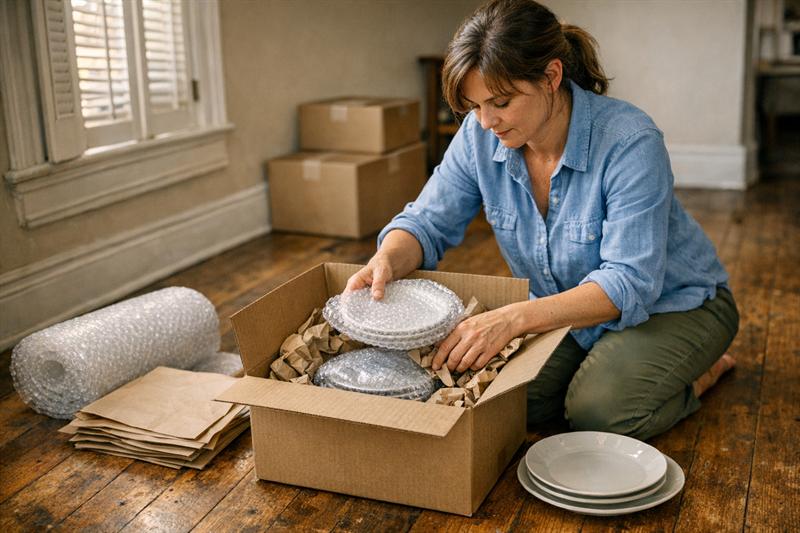
Place a layer of packing paper or other clean cushioning material in the bottom of the box. This separates fragile contents from the base of the carton and gives the first layer a more stable foundation.
Skipping this step leaves breakables directly against the box bottom. A hard set-down can then transfer force more directly into the item.
Step 4: Wrap Items Individually
Wrap each item before placing it in the box. Cover exposed surfaces and add extra protection around edges, handles, stems, corners, and other protruding parts.
When packing is rushed, items may touch directly inside the carton. That contact can cause them to rub, press, and strike each other whenever the box changes position.
Step 5: Place Heavy Items Low and Lighter Items High
Set heavier pieces in the bottom of the box and lighter pieces above them. Build stable layers instead of dropping items loosely into the carton.
Heavy objects placed on top of lighter glassware or delicate décor create pressure that wrapping alone may not solve. During stacking, fragile pieces can end up supporting weight they were not meant to carry.
Step 6: Fill Gaps and Prevent Shifting
Fill open spaces with packing paper or suitable cushioning material. Contents should fit firmly enough that they do not slide, lean, or collide when the carton is moved.
Use a gentle movement check before sealing. If the contents rattle or shift, the box is not ready for loading. Add cushioning until the movement stops.
Step 7: Seal, Label, and Note the Room
Seal the carton securely, then label it with its room and contents. Mark fragile boxes clearly, and note upright orientation when the item needs it.
Clear labeling helps speed up unloading and distinguishes fragile boxes from general household cartons. For broader move preparation, use the complete local moving checklist alongside your packing plan.
How to Pack Dishes, Plates, Bowls, and Serving Pieces
Pack plates individually, control the box weight, fill open spaces, and prevent the stack from shifting. Dishes are dense and breakable, so the main risk is often not a lack of wrapping but a carton that becomes too heavy or allows contents to move.
Pack Plates Vertically When Appropriate
When the arrangement is stable, place wrapped plates vertically in a sturdy carton. This approach can reduce pressure across a flat stack and make it easier to keep plates separated.
Wrap every plate and pack them firmly enough to prevent movement. A loosely packed row of plates can still collide when the carton is tilted or set down.
Protect Bowls and Serving Dishes by Shape
Bowls can be nested when there is enough protective material between them. Do not let one bowl sit directly against another, especially around rims and edges.
Serving pieces need more attention because handles, lids, and uneven shapes create exposed pressure points. Wrap detachable parts separately and fill the spaces around the main piece so it stays in position.
Keep Kitchen Boxes Smaller Than Expected
Dishes become heavy quickly. A smaller box that is packed firmly and carried steadily is more practical than a large carton loaded to the point where it strains the box and the person lifting it.
This is one of the moving mistakes that can create avoidable problems on move day. For more planning guidance, see common moving mistakes that cause delays and how to avoid them.
How to Pack Glassware, Stemware, and Mugs
Pack glasses by wrapping each piece, protecting the base and rim, separating every item, and filling the box so nothing shifts. Stemware and mugs need extra attention because stems and handles are exposed parts that can break under pressure.
Wrap Glassware From the Base Up
Wrap each glass from the base upward, covering the body and rim with protective material. Keep glasses from touching one another directly inside the box.
Do not stack heavy items on top of glassware. Once weight presses into the rim or side of a glass, the risk is no longer limited to bumps during transport.
Give Stems and Handles Extra Attention
Stemware needs added cushioning around the stem, while mugs need protection around the handle. These are the parts most likely to catch pressure from nearby items or the side of the carton.
If a stem or handle is exposed after wrapping, add another layer before placing the item in the box. The goal is to prevent that narrow point from carrying the load.
Use Dividers Correctly
Dividers are useful for separating glasses of similar size. They work best inside a cushioned box where each glass is still wrapped and the carton has no open space.
Using dividers without wrapping is a shortcut that can leave glasses exposed during carrying and loading. Separation alone does not stop pressure or movement inside the carton.
How to Pack Mirrors, Framed Art, Lamps, and Awkward Fragile Items
Mirrors, framed art, lamps, and awkward décor need more than standard box packing because their corners, glass surfaces, and removable parts are exposed. These items are harder to secure when they are oversized, unusually heavy, or difficult to carry through tight spaces.
Protect Corners and Glass Surfaces on Mirrors and Frames
Protect the corners first, then cover the glass or frame with a protective outer layer where appropriate. Keep framed pieces upright during storage and loading when the item and truck arrangement allow it.
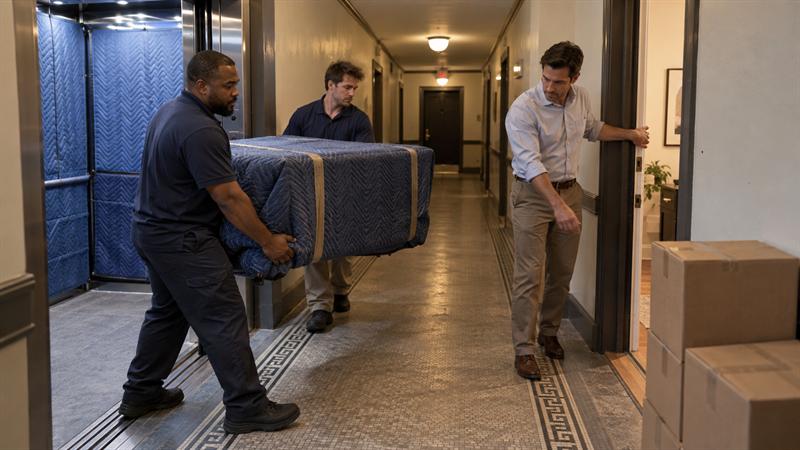
Large mirrors and artwork should not be treated like ordinary wall décor. Their size can make them harder to control through doorways, stairs, and tight turns. That concern is especially relevant for apartment moves involving stairs, elevators, parking, and tight spaces.
Remove and Pack Detachable Lamp Parts Separately
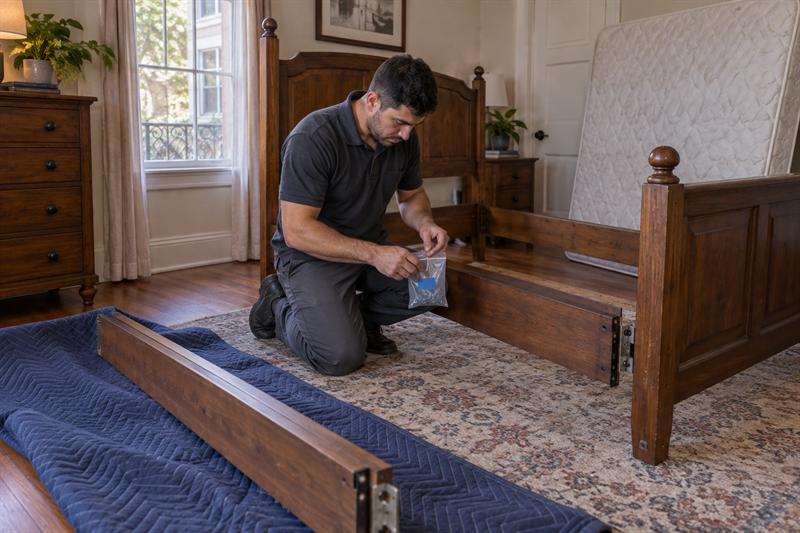
Remove bulbs and detachable lamp components before packing when possible. Wrap the base, protect the shade separately, and keep cords or hardware together so the lamp can be reassembled without searching through multiple boxes.
A lamp packed as one loose unit can create pressure on the shade, harp, or bulb area. Separating the parts helps keep these vulnerable pieces from becoming load-bearing points.
Identify Items That Need Specialty Planning
Large mirrors, oversized framed art, delicate furniture components, unusually heavy décor, antiques, and one-of-a-kind pieces need a more deliberate plan. If an item is difficult to replace, difficult to carry, or difficult to secure in a standard carton, it needs more consideration than a basic packing task.
Some fragile items should not be left to last-minute packing. Plan ahead when any of the following applies:
- A mirror, artwork piece, or furniture component is too large for a standard box.
- An item has glass, delicate corners, loose parts, or an awkward shape that will not stay stable.
- The item is sentimental, valuable, or difficult to replace.
- You do not have the time, materials, or safe space to pack it carefully.
For items that need more than standard cartons and DIY packing, explore H and U Express Moving’s handling options for large or fragile items in New Orleans. Establishing a clear plan before moving day can make loading more organized and reduce last-minute decisions.
How to Pack Electronics and Delicate Equipment
Pack electronics in boxes that limit movement, protect screens and ports from direct pressure, and keep cords and accessories organized. Loose accessories, poor fit, and moisture exposure can create problems before the device is unpacked.
Use Original Packaging When Available
Original packaging can be useful when it remains in good condition and fits the item properly. If you do not have it, choose a box that leaves room for protective layers without allowing the device to shift.
Do not force electronics into boxes that are too small or leave them loose in boxes that are too large. Both situations can create pressure or movement where it is not wanted.
Photograph Connections and Keep Accessories Together
Take photos of cable connections before disconnecting televisions, computers, monitors, or other equipment. Place cords, remotes, adapters, and detachable parts in labeled bags or containers.
This helps keep unpacking from becoming a troubleshooting project. If cords are mixed into unrelated boxes, reassembly can take longer and important pieces are easier to overlook.
Protect Electronics From Pressure and Moisture
Keep screens, ports, and delicate components away from direct pressure from loose items. Use clean, dry packing materials and follow manufacturer instructions when they are available for a specific device.
If your move includes a gap between homes, do not leave delicate cartons where they could be exposed to moisture or unstable stacking. Storage and moving plans need to work together when belongings will not go directly from one home to the next.
Common Mistakes That Put Fragile Items at Risk
Most fragile packing problems come from a few repeat mistakes. Correcting them before loading day is easier than discovering a damaged item while unpacking.
Using Oversized Boxes for Heavy Breakables
Large cartons filled with dishes or glassware can become hard to lift and hard to control. This can lead to strained seams, uneven carrying, and harder set-downs that transfer force into the contents.
Leaving Empty Space Inside the Carton
Empty space lets fragile items move every time the box is lifted, turned, or stacked. If a box rattles, the contents are not secured, and more cushioning is needed before it is sealed.
Mixing Heavy and Delicate Items Without a Plan
Heavy pieces placed above delicate ones create pressure that wrapping does not solve. Keep heavy items low, lighter items high, and avoid combining items that do not stack securely together.
Relying on a Fragile Label Instead of Proper Packing
A fragile label tells people to handle the box carefully. It does not stop the contents from colliding inside, and it does not strengthen a weak carton.
Reusing Weak, Damaged, or Damp Boxes
A weakened box may look usable while it is sitting on the floor. Its failure can show up later when the carton is lifted, stacked, or carried through the move.
When Professional Packing Is a Practical Choice
DIY packing is practical for standard household breakables when you have enough time, sturdy boxes, and the supplies needed to pack each carton carefully. Professional help can be useful when an item is hard to secure, hard to carry, or too important to handle with a rushed plan.
When DIY Packing May Be Manageable
- You have standard household dishes, glassware, and décor.
- You have time to wrap items separately and pack boxes in stable layers.
- You have sturdy cartons, packing paper, tape, and cushioning materials.
- Your items fit safely into boxes and can be carried without unusual handling needs.
When to Consider Partial or Full Packing Help
- You have a large kitchen with extensive dishes or glassware.
- You are moving artwork, mirrors, antiques, collections, or sentimental belongings.
- You have oversized, heavy, or awkward items that do not secure easily.
- Your move date is close and packing is still unfinished.
- You want help with fragile items without handing over the entire packing job.
Connect Protective Supplies to a Better Packing Plan
H and U Express Moving offers professional packing services and handling options for large or fragile items. Reviewing the available service options and included supplies can help you decide whether to pack independently, use partial packing help, or arrange more complete support.
The practical decision comes down to the item and the time available. If a fragile item cannot be wrapped, boxed, and carried securely, make a handling plan before loading begins.
Fragile-Item Packing Checklist Before Moving Day
Use this checklist before any fragile box is loaded. Each point addresses a condition you can verify yourself.
- The box is clean, dry, sturdy, and taped securely.
- The bottom of the box has a cushioning layer.
- Each breakable item is wrapped or separated from direct contact.
- Heavy pieces are packed low, with lighter pieces above them.
- There are no open gaps that allow items to shift.
- The box passes a gentle movement check without rattling.
- The carton is manageable to lift and is not overloaded.
- The outside identifies the contents, room, and fragile handling needs.
Key Takeaways
- Use boxes that fit the item’s size and weight.
- Wrap fragile belongings individually and protect rims, handles, stems, corners, and screens.
- Keep heavy items low and avoid overloading cartons.
- Fill open gaps so contents cannot move during the move.
- Consider professional packing or specialty handling when an item is difficult to replace, carry, or secure safely.
Frequently Asked Questions
What Is the Best Material for Packing Fragile Items?
Packing paper, sturdy boxes, tape, and cushioning for open gaps are core supplies for most fragile household items. Bubble wrap is useful for delicate surfaces and irregular shapes, while dividers help separate suitable glassware. Match the material to the item, then make sure the finished box does not allow movement.
Should Fragile Items Be Packed in Small or Large Boxes?
Small or medium boxes are usually better for dense, heavy breakables such as dishes and glassware. The box should fit the contents without leaving unnecessary empty space, and it should remain manageable to lift. If a carton is too heavy to carry steadily, repack it before moving day.
How Do You Pack Plates So They Do Not Break During a Move?
Wrap each plate, pack it securely in a sturdy box, control the overall box weight, and fill open spaces so nothing shifts. Vertical placement can help reduce pressure across a flat stack when the plates are wrapped and held firmly in place. Finish with a gentle movement check before sealing the carton.
Is Bubble Wrap Better Than Packing Paper for Moving?
Neither is better for every item. Packing paper is useful for wrapping and layering, while bubble wrap adds cushioning around delicate corners, glass surfaces, and irregular pieces. Use the material that fits the item’s shape and vulnerable areas instead of relying on one material for every box.
How Do You Know if a Fragile Box Is Packed Properly?
A properly packed fragile box is securely taped, manageable to lift, and does not rattle or shift when gently moved. Each item should be wrapped or separated, heavy pieces should sit low in the carton, and open gaps should be filled. If the contents move, the box needs more cushioning.
When Should You Hire Professional Packers for Fragile Items?
Professional packing can be useful for large, awkward, valuable, sentimental, unusually fragile, or difficult-to-secure belongings. Oversized mirrors, framed artwork, antiques, delicate furniture components, and extensive dish collections often need more planning than standard boxes provide. Address those items before move day instead of trying to solve the problem while loading is underway.
Conclusion
The main challenges in fragile packing are internal movement, excess weight, weak cartons, and items packed without a stable handling plan. When those issues are overlooked, boxes can become harder to carry, contents can shift during transport, and fragile belongings may end up supporting pressure they were not meant to carry.
H and U Express Moving can be a practical option when you are short on time, dealing with difficult-to-pack items, or preparing belongings that need more than a standard carton. Explore professional packing services for your New Orleans move before moving day, especially when fragile-only packing or large-item handling would make your move easier to manage.