Quick Answer: Apartment moves often become difficult because of access constraints like stairs, elevators, parking, and tight layouts. These limitations slow the process, increase handling risk, and require planning around access, not just packing.
Most people expect moving to be about boxes and distance. Then moving day arrives and access becomes the real challenge. Stairs take longer than expected, elevators are booked or restricted, parking is farther away than planned, and furniture does not fit the way it did before. At H and U Express Moving, these are the details that can turn a straightforward move into a delayed one.
This guide explains how apartment moves work in practice and what needs to be handled differently to reduce delays, damage, and last-minute stress.
Why Apartment Moves Are More Complicated Than They Seem
Apartment moves are largely shaped by access. Distance matters, but the bigger factor is how easily items can move in and out.
One of the most common problems is underestimating how much these constraints slow everything down. What looks like a quick move can stretch into hours when access is limited or poorly planned.
- Stairs that limit how items can be carried
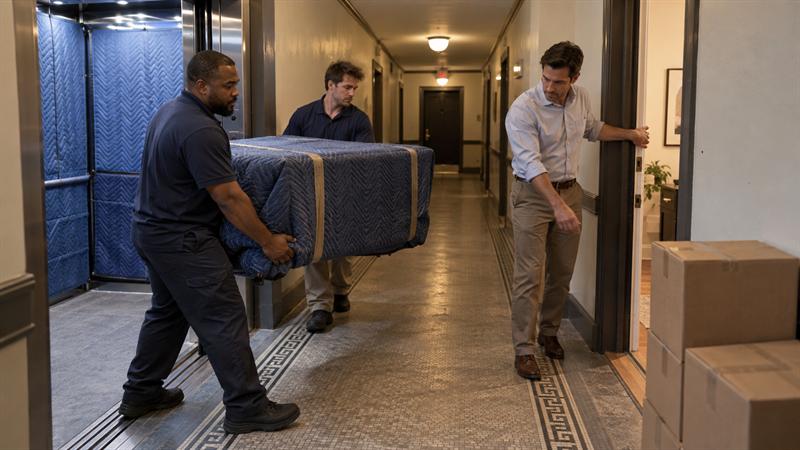
- Elevators with fixed time windows
- Parking that increases walking distance
- Narrow hallways and doorways that restrict movement
This is where delays and damage often begin. When access is not planned, every step takes longer and requires more handling. Many of the issues covered in common moving mistakes that cause delays come back to these same constraints.
That is why apartment and home moving services in New Orleans are typically planned around access first, then packing and transport.
How to Handle Stairs Without Damaging Items or Property
Weight Distribution and Safety Considerations
Stairs change how weight needs to be handled. The angle shifts, footing becomes less stable, and control matters more than speed.
A frequent mistake is carrying items the same way they would be carried on flat ground, which can lead to slips, dropped furniture, or damaged walls.
Proper handling relies on balance, controlled movement, and clear coordination between the people carrying the item. When any part of that breaks down, the chance of damage goes up quickly.
When Stairs Require Professional Help
Stairs become more difficult when size, weight, and space all work against you.
If you are dealing with:
- Multiple flights of stairs
- Large or uneven furniture
- Tight stairwells with limited turning space
Moves tend to slow down fast in these conditions. Items can get stuck, corners get scraped, and fatigue sets in. In these situations, using safe handling for large or fragile items can help reduce repeated handling and avoid unnecessary damage.
Elevator Moves: Rules, Scheduling, and Time Management
Reserving Elevators and Understanding Building Policies
Many apartment buildings require elevator reservations with fixed time slots.
A common mistake is assuming the elevator will be available. Then access is delayed or restricted, and the rest of the move gets pushed back. Once that window is missed, everything else becomes harder to keep on schedule.
Buildings may also require:
- Reserved time windows
- Protective padding inside elevators
- Proof of insurance or deposits
Missing any of these steps can delay the move before it starts.
Maximizing Limited Elevator Time
Elevator access is usually a fixed window, so the move needs to match that timing.
Preparation makes the difference here. Items should be staged and ready before the elevator is available. Loading out of order or stopping to reorganize slows everything down.
Without a clear sequence, time gets lost between trips instead of being used for continuous movement.
Parking Challenges and How to Plan Ahead
Street Parking vs Reserved Loading Zones
Parking distance directly affects how long the move takes.
This is easy to underestimate. What looks like a short distance turns into repeated long carries, which slows the pace and adds unnecessary strain.
Street parking can also introduce delays from traffic or limited space. Reserved loading areas reduce those interruptions but usually need to be arranged in advance.
Reducing Carry Distance and Delays
More distance means more trips, and more trips mean more handling.
That is usually when fatigue builds. As the move goes on, slower movement and less control increase the chance of bumps and drops.
Planning parking ahead of time helps keep the move efficient and reduces unnecessary back-and-forth.
Navigating Tight Hallways, Corners, and Doorways
Techniques for Moving Large Furniture
Tight spaces change how furniture needs to be moved.
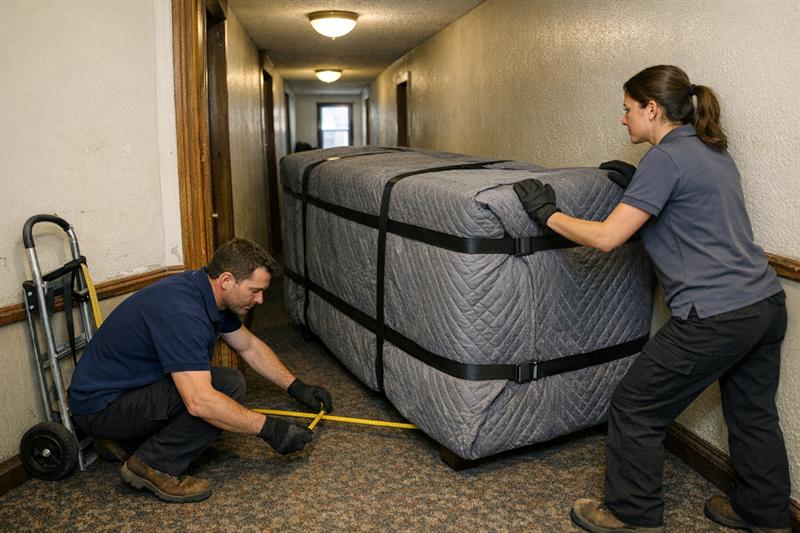
A common mistake is trying to push items straight through without adjusting the angle. That is when scraping, jamming, and damage usually start.
Effective techniques include:
- Pivoting items to match the space
- Measuring doorways and hallways in advance
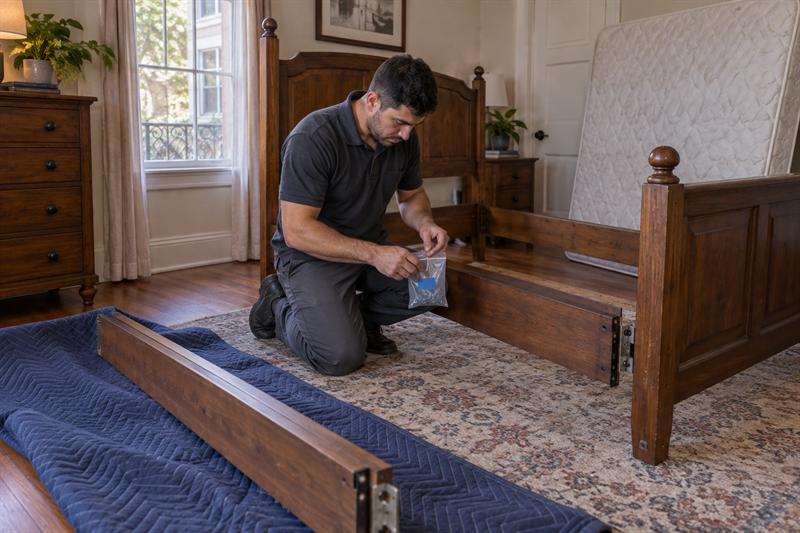
- Disassembling pieces when needed
Skipping these steps often leads to repeated attempts and more handling than necessary.
What to Do When Furniture Won’t Fit
When something does not fit, forcing it usually makes the problem worse and increases the chance of damage.
The better approach is to decide quickly whether to:
- Disassemble the item
- Use a different entry path
- Place the item into temporary storage
In tighter moves, storage can become part of the plan rather than a last-minute backup. This is explained in how moving and storage services work together.
If your move includes multiple constraints, planning matters even more.
- Stairs with no elevator access
- Parking located away from the building
- Large or difficult-to-move furniture
- Limited move-in time windows
If more than one of these applies, the move usually benefits from a clear plan and coordinated execution to stay on track.
Protecting Fragile and Large Items in Apartment Moves
High-Risk Items in Tight Environments
Some items are more exposed during apartment moves because of tight paths and repeated handling.
- Glass and mirrors
- Electronics
- Antiques
- Large furniture
These items are often most vulnerable in stairwells, corners, and narrow hallways where contact is harder to avoid.
Packing Strategies That Reduce Damage Risk
Protection depends on how well items are prepared before they are moved.
A common mistake is using minimal packing for items that need more reinforcement. That often leads to damage during handling rather than during transport.
More effective approaches include:
- Layered wrapping and cushioning
- Securing items so they do not shift
- Using boxes that match the item size and weight
For higher-risk items, professional packing services can improve protection and reduce repeated handling.
When to Consider Professional Packing or Moving Help
Situations Where DIY Becomes Risky
DIY moves become harder when constraints overlap.
If stairs, tight spaces, limited time, and large items are all involved, the move becomes harder to control. That is where delays build and handling mistakes become more likely.
At that point, a move often stops being efficient and starts becoming reactive.
How Packing Services and Storage Simplify Logistics
Some moves require more flexibility, especially when timing does not line up cleanly.
Storage can help manage gaps between move-out and move-in and reduce pressure when access is limited. It also helps prevent rushed decisions that lead to poor placement or avoidable damage.
Using long-term storage options in New Orleans can make it easier to complete a move in stages instead of forcing everything into one narrow window.
Key Takeaways
- Apartment moves are shaped by access constraints, not just distance
- Stairs, elevators, and parking create many of the main delays
- Tight spaces increase handling complexity and damage risk
- Planning ahead reduces repeated movement and time loss
- Professional support becomes more useful as constraints stack
Conclusion
Apartment moves become more difficult when access, timing, and space are not planned together. Stairs, elevator limits, parking distance, and tight layouts all add friction to the process.
When these factors are not addressed early, the move usually slows down, requires more effort, and increases the chance of damage. What starts as a simple move can turn into a series of delays and adjustments.
H and U Express Moving approaches apartment moves by planning around these constraints from the start. That includes access timing, item handling, and efficient movement through tight spaces.
If your move involves stairs, limited access, or a complex layout, the next step is to plan it correctly from the beginning. Request a quote to get a clear plan in place before moving day.
Frequently Asked Questions
How do you move into an apartment with stairs?
Use controlled lifting and plan the order of items before starting. Heavier items are usually handled by multiple people with balanced positioning. In tighter staircases or multi-level buildings, extra help can make the move safer and easier to manage.
Do you need to reserve an elevator when moving?
Many apartment buildings require reservations with set time slots. Missing this step can delay access or limit when you can move. Checking building rules in advance helps avoid scheduling problems.
What is the hardest part of moving into an apartment?
The hardest part is often managing multiple constraints at once, such as stairs, parking distance, and tight entry points. These factors slow movement and make handling more complicated.
How do you move large furniture into a small apartment?
Measure spaces ahead of time, disassemble items when needed, and use angled positioning to navigate corners. Larger pieces often need to be adjusted during the move to fit safely through tight areas.
How far should a moving truck be parked from an apartment?
The closer the truck is to the entrance, the more efficient the move will usually be. Longer distances increase the number of trips and the time needed to finish the move.
Is it worth hiring movers for an apartment move?
It often becomes more practical when the move includes stairs, tight layouts, or heavy items. These conditions increase complexity and make controlled handling more important.