Quick Answer: Preparing items for storage means more than putting boxes in a unit. Belongings should be sorted, cleaned, dried, protected, labeled, and arranged for access. Without a plan, storage can lead to damaged items, missing hardware, and boxes that are difficult to find when you need them.
At H and U Express Moving, customers may find that items packed for a moving truck are not always ready to remain stored for weeks or months. A box packed for a direct move needs less planning than furniture, appliances, and household goods that will stay enclosed until the next stage of the move.
Key Takeaways
- Sort items before packing so essentials do not disappear into storage.
- Clean and dry belongings before boxing or wrapping them.
- Use sturdy boxes and protective materials that fit the item.
- Label boxes by contents, destination room, and access priority.
- Load storage with heavy items low, fragile items protected, and an aisle for retrieval.
- Keep perishable, hazardous, restricted, and daily-essential items out of storage.
Start by Deciding What Actually Needs to Go Into Storage
Start with sorting, not boxes. Packing everything together can leave you storing items you need, paying for space taken up by unwanted belongings, and creating more work when it is time to move in.
Separate belongings into four groups: items moving directly to the new home, items going into storage, items to donate or discard, and items that stay with you. Problems can arise when a move has a gap between homes and important items get buried behind furniture or stacked at the back of a unit.
Separate Move-Now, Store, Donate, and Keep-With-You Items
- Move now: Items needed immediately at the next home.
- Store: Belongings you want to keep but will not need during the transition.
- Donate or discard: Damaged, expired, unused, or unwanted items that should not take up paid storage space.
- Keep with you: Daily essentials, records, valuables, medications, and items needed in temporary housing.
Set aside important papers, medications, chargers, work equipment, basic kitchen items, clothes, and anything you will need before final move-in. This simple split helps prevent the frustrating search for a coffee maker, school supplies, work files, or spare keys that were packed with items meant to remain untouched.
Match the Plan to Short-Term or Long-Term Storage
Short-term storage usually needs an access-first plan. If you expect to retrieve seasonal clothing, kitchen basics, documents, or children’s items, keep those boxes near the front of the unit.
Long-term storage usually needs a protection-first plan. Cleaning, dry packing, durable boxes, an inventory, and thoughtful placement become more important when belongings will remain stored for an extended period. Use this guide to choose between short-term and long-term storage based on your move timeline and access needs.
Clean and Dry Everything Before Packing for Storage
Items should go into storage clean and completely dry. Food crumbs, dust, moisture, and lingering odors are harder to deal with once belongings are enclosed in boxes, covers, and a storage space.
This issue can get worse when people pack immediately after cleaning. A damp towel, appliance interior, outdoor cushion, or kitchen container can affect nearby items once it is sealed away. Let everything dry fully before wrapping or boxing it.
Prepare Kitchen Items, Appliances, Furniture, and Textiles
Wash and dry kitchen items before packing them. Remove food residue from small appliances, wipe dust from furniture before adding protective materials, and clean textiles before folding them into boxes or bins.
For appliances, empty contents and address moisture before storage. For furniture, focus on clean surfaces, removable components, and protection from rubbing or pressure. The goal is simple: do not store a problem that was easy to address before loading day.
Avoid Packing Damp Items
Do not box, bag, or cover items until they are dry. This includes recently washed linens, wiped-down furniture, defrosted appliances, wet cleaning tools, and outdoor items brought in after rain or washing.
Drying is not a minor finishing step. It helps reduce the chance of trapping moisture inside a closed box or protective cover during the storage period.
Choose Packing Materials That Make Sense for Storage
Use packing materials based on what you are storing, not based on what is closest at hand. Sturdy boxes work well for many household goods, while fragile items, mattresses, furniture, and electronics generally need more targeted protection.
A common packing mistake is trying to solve every problem with stretch wrap alone. Stretch wrap has a purpose, but it does not replace cushioning, furniture pads, packing paper, a mattress cover, or a properly sized box.
Use Sturdy Boxes and Keep Weight Manageable
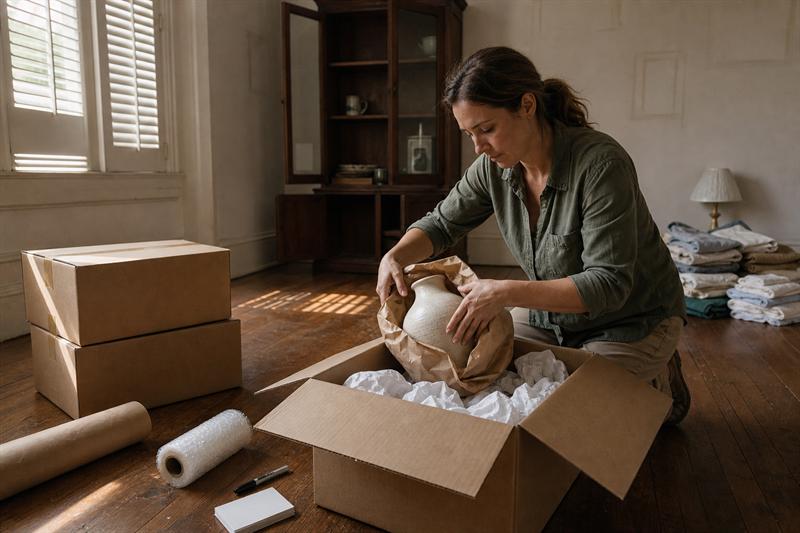
Use boxes that are in good condition and sized for the item inside. Put heavier items in smaller boxes so they remain manageable to lift, and use packing paper or similar cushioning to reduce shifting.
Overfilled boxes can lead to crushed corners, broken bottoms, unstable stacks, and difficult handling. If a box is too heavy to move comfortably, it is generally too heavy to stack safely in storage.
When Plastic Bins Can Be Helpful
Plastic bins can be useful for selected belongings, especially items that benefit from a more rigid container. They still need clear labels, secure lids, and sizes that stack safely.
Bins are not automatically the best option for every item. Large bins become difficult to lift when overloaded, and fragile belongings still need cushioning inside them.
Use Protective Supplies for Furniture and Fragile Belongings
Use packing paper for wrapping, cushioning for breakable items, moving blankets or pads for furniture, and protective covers for mattresses and similar pieces. Protective materials work best when they match the item’s shape, surface, and handling needs.
The practical point is not to use more material than necessary. It is to use the right protection before items are stacked, moved, and stored.
Prepare Furniture, Mattresses, and Large Household Items
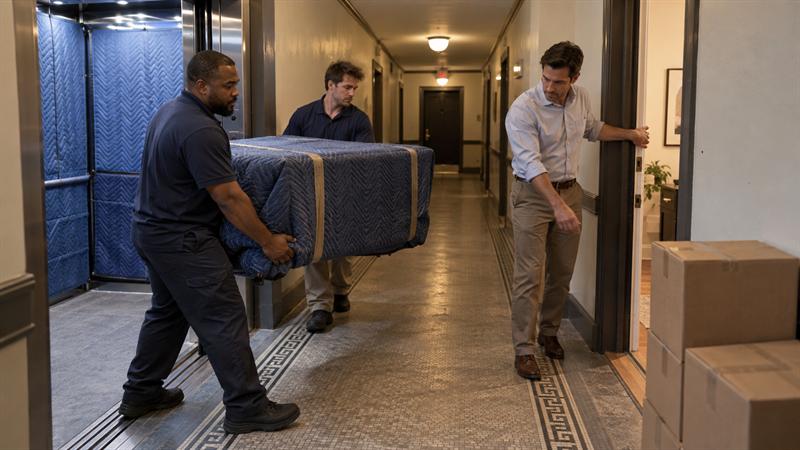
Large items take up space quickly and can create access problems when they are loaded without a plan. Prepare them before moving day so they are easier to carry, protect, position, and retrieve.
Furniture also needs material-specific care. Wood, upholstery, glass, mirrors, and mattresses should not all be handled with the same wrapping method.
Disassemble Large Pieces When It Improves Safety and Space
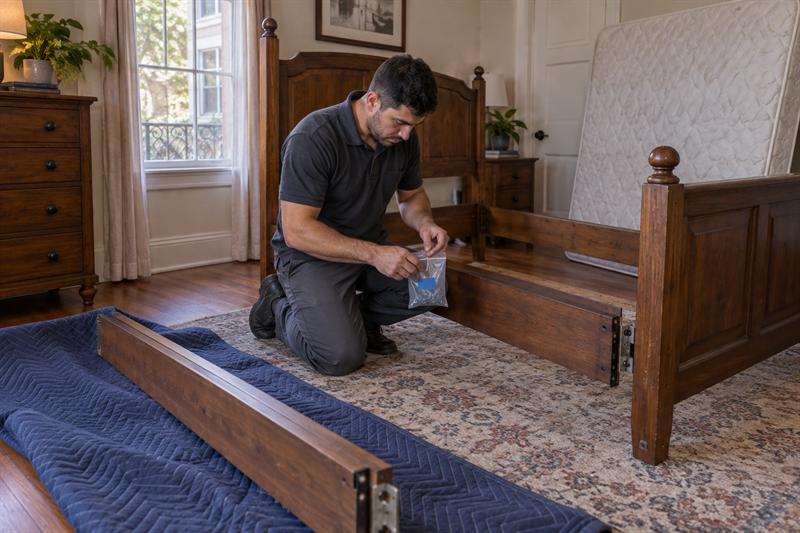
Disassembling bed frames, tables, shelving, and similar pieces often makes them easier to protect and store. It can also reduce awkward lifting and help large pieces fit into a more stable storage layout.
Do not disassemble every item automatically. Some pieces are better kept intact, especially when disassembly creates a difficult reassembly process or conflicts with manufacturer instructions. The right choice is the one that improves handling without creating a new problem later.
Label and Secure Hardware
Place screws, bolts, brackets, and small hardware in labeled bags. Mark each bag with the furniture item it belongs to, and keep it with that item when you can do so without damaging the surface.
A common moving problem is that a bed frame or table arrives intact, but its hardware is in an unidentified box somewhere in storage. Clear labels make reassembly more straightforward when the item reaches its final room.
Protect Wood, Upholstery, Glass, Mirrors, and Mattresses
Protect wood surfaces from rubbing and pressure. Keep upholstered pieces clean and covered with appropriate materials. Wrap glass, mirrors, and framed items with cushioning that limits impact, and protect mattresses with a clean, properly fitted storage cover or bag.
Do not place heavy boxes directly on delicate furniture, glass surfaces, or mattresses. That can lead to pressure damage and make safe retrieval harder. For oversized, awkward, or fragile belongings, professional help with large or fragile items can provide additional support during handling and placement.
Prepare Appliances and Electronics for Storage
Appliances should be empty, clean, and dry before storage. Electronics should stay organized with their cords, remotes, and accessories so they are easier to set up when the storage period ends.
Leaving moisture, food residue, or loose accessories behind creates more work later. Appliance and electronics preparation is generally straightforward, but it needs to happen before the unit is loaded.
Clean, Empty, and Dry Appliances Before Storage
Empty and clean refrigerators, freezers, washing machines, dishwashers, coffee makers, and other household appliances before storage. Make sure interior areas are dry before they are closed up.
Specific requirements differ by model, so manufacturer instructions should guide any shutdown, draining, or transport steps. What matters most is not storing food, standing water, residue, or moisture inside an appliance.
Keep Electronics and Accessories Together
Take a photo of cable connections before disconnecting equipment if that will help with setup later. Label cords, place remotes and manuals in a marked bag, and pack accessories with the device they support.
If you are seeing a growing pile of unidentified cables while packing, setup after storage will likely take longer than necessary. Keep each system together before it enters the unit.
Pack Fragile and Valuable Items With Retrieval in Mind
Fragile items need two forms of protection: cushioning inside the box and a storage position that keeps heavier items from pressing against them. Labels matter, but labels alone do not stop items from shifting or being stacked incorrectly.
Keep irreplaceable records, important documents, and essential valuables with you when practical. Storage is generally better suited to belongings that can be packed, protected, and left undisturbed without creating an immediate access problem.
Use Smaller Boxes for Breakable or Dense Items
Use smaller boxes for dishes, glassware, collectibles, lamps, framed pieces, and other breakable or dense belongings. Cushion each item, fill gaps so contents do not move, and label the box with its contents and handling needs.
This approach helps keep weight manageable. A large box filled with dense breakable items is difficult to carry and more likely to be placed where it does not belong.
Know When Professional Packing May Be Worth Considering
Professional packing can be useful when items are difficult to protect, difficult to lift, difficult to replace, or time-consuming to pack correctly. It is not necessary for every box in every move.
If your storage plan includes fragile, oversized, or hard-to-pack belongings, decide how they will be handled before move day.
- You have glass, mirrors, artwork, antiques, or delicate furniture that should not be stacked with standard boxes.
- You are storing large pieces that need disassembly, padding, and careful placement.
- You have limited time and still need to sort, pack, and clear the home before the move.
- You do not have a clear plan to protect items during both transport and storage.
These situations may call for a more organized packing and handling plan. Compare your options in full packing versus partial packing services before the work becomes a move-day scramble.
Label Every Box and Create a Simple Storage Inventory
Labeling is what makes storage usable later. A room name alone is rarely enough when boxes are stacked, furniture is in front of them, and the item you need is not something you planned to unpack right away.
Use labels that tell you what is inside, where it belongs after the move, and whether you may need it during storage. This helps prevent repeated box opening and unnecessary handling of packed items.
Use Labels That Answer Three Questions
- What is inside? List the main contents, not only the room name.
- Where does it go later? Note the destination room in the new home.
- Will it be needed before move-in? Mark boxes as “access during storage,” “open first,” or “long-term storage.”
A label such as “Bedroom” creates a search problem. A label such as “Bedroom: sheets, bedside lamps, extension cords, access during storage” gives you useful information before you open the box.
Keep an Inventory of Important Belongings
Create a basic paper or digital inventory for important boxes and larger items. Include a box number, broad contents, and where the item sits in the unit.
Photos can also help document how furniture, electronics, and larger groups of belongings were packed. An inventory does not replace records required by an insurer or storage provider, but it makes organization more reliable when the unit is full.
Organize the Storage Space for Protection and Easy Access
Load the storage space with a retrieval plan. The goal is not to fill every open inch as quickly as possible. The goal is to create stable stacks, protect delicate items, and leave a workable path to anything you may need.
A unit packed tightly from wall to door becomes difficult to search and reorganize. You may need to move much of the unit to retrieve one box.
Load Heavy Items First and Avoid Unstable Stacks
Place heavy, sturdy boxes and large stable items on the bottom. Stack lighter boxes above them, and keep fragile belongings out of positions where they support weight or receive pressure.
Check box condition as you load. A crushed or weakened box is not a reliable base for other belongings, and unstable stacks can create handling issues every time the unit is accessed.
Leave an Access Aisle
Leave a path from the entrance toward the back if you might need anything during storage. Place boxes marked “access during storage” and “open first” near the front.
Storage should be planned for removal day, not only loading day. An access aisle means you can retrieve a needed box without dismantling the entire unit.
What Not to Put Into Storage
Keep perishable food, flammable materials, hazardous chemicals, fuel-containing equipment, live plants, medications, and critical documents out of storage. These items can create safety or policy issues, or they should remain available for daily life.
Do not treat this list as a substitute for your specific storage provider’s rules. Restrictions vary by facility and storage type, but identifying these items before loading helps prevent last-minute repacking and delays.
Check Storage Rules Before Packing Restricted Items
Review storage restrictions before boxes are sealed and the truck is loaded. A common issue is discovering too late that a stored item contains food, fuel, chemicals, or another restricted material.
That discovery can lead to sorting boxes again when time is shortest. Set restricted items aside during the first sorting stage so they never enter the storage pile.
When Coordinated Moving and Storage Can Simplify the Process
A move involving storage has more handoffs than a direct move: packing, loading, transport, storage placement, retrieval, final delivery, and unpacking. When those steps are planned separately, boxes can get mixed, access priorities can disappear, and items may be handled more times than necessary.
H and U Express Moving provides home moving, packing, short-term storage, long-term storage, and handling for large or fragile items. Planning these services as one process can keep storage decisions connected to pickup, final delivery, and unpacking.
For households managing a delayed move-in, renovation, downsizing, or temporary living arrangement, moving and storage services working together can provide a clearer path from the first box to final delivery. Each service addresses a different part of a move that does not happen all at once.
Pre-Storage Checklist Before Move Day
- Sort items into move-now, store, donate, and keep-with-you groups.
- Set aside medications, documents, valuables, chargers, and daily essentials.
- Clean and fully dry all items before packing.
- Use sturdy boxes and protective materials that match the item.
- Disassemble large furniture when it improves safety and storage space.
- Label and secure furniture hardware.
- Empty, clean, and dry appliances according to manufacturer guidance.
- Label boxes with contents, destination room, and access priority.
- Create an inventory for important boxes and larger belongings.
- Keep heavy items low, fragile items protected, and priority boxes near the entrance.
- Leave an access aisle if anything may be needed before final move-in.
- Remove prohibited, perishable, hazardous, and essential daily-use items from the storage pile.
Conclusion: Prepare for Storage So Moving In Is Easier Later
The real problem with storage is not a lack of space. It is putting belongings away without a plan for their condition, location, and eventual return to your home. When items are packed damp, unlabeled, poorly protected, or stacked without access, the storage unit can become another moving problem on move-in day.
H and U Express Moving helps residential customers prepare for the full process with home moves, packing support, storage options, and handling for large or fragile items. If your move includes a gap between homes or belongings that need more than a quick box-and-store approach, make the plan now so final delivery and unpacking can begin with fewer preventable problems.
Frequently Asked Questions
How do you prepare items for storage before moving?
Start by sorting items into what moves now, what goes into storage, what should be donated or discarded, and what needs to stay with you. Then clean and dry stored belongings, use proper boxes and protection, label each container, create an inventory, and load the unit with access in mind.
The important difference is retrieval. A box labeled only “kitchen” is difficult to use during a transition, while “Kitchen: coffee maker, mugs, pantry containers, access during storage” tells you what it contains and where it should go.
Should furniture be wrapped before going into storage?
Furniture should be protected before storage, but the method depends on the material. Wood, upholstery, glass, mirrors, and mattresses need different treatment because they face different risks from rubbing, impact, pressure, and stacking.
For example, a glass tabletop needs cushioning and protection from pressure, while upholstered furniture needs a clean covering and careful placement away from sharp edges or heavy boxes. The goal is to protect the piece without treating every material the same way.
What should not be put in a storage unit?
Perishable food, flammable materials, hazardous chemicals, fuel-containing equipment, and live plants generally do not belong in storage. Medications, important documents, and daily essentials should also remain accessible instead of being sealed into a unit.
The key difference is between items that are simply inconvenient to store and items that create a safety or policy issue. Find restricted belongings during sorting, not after the truck is loaded.
How should appliances be prepared for storage?
Appliances should generally be emptied, cleaned, and fully dried before storage. This includes appliances that hold food, water, residue, or moisture, such as refrigerators, freezers, washing machines, dishwashers, and small kitchen equipment.
Manufacturer instructions should guide model-specific preparation. Keep cords, manuals, and removable accessories clearly labeled with the appliance so they are ready to locate and set up after storage.
How do you organize a storage unit so items are easy to find?
Place heavy and sturdy items on the bottom, keep fragile items free from pressure, and put boxes you may need near the entrance. Leave an aisle if the unit will be accessed before final move-in.
An inventory makes the layout work. Numbered boxes and notes about contents and location let you find a needed item without opening every box or moving large furniture out of the way.
Is climate-controlled storage worth considering for household belongings?
Climate-controlled storage may be worth considering when the storage period, local environment, or item type creates added concern for sensitive belongings. Wood furniture, electronics, documents, valuables, and other moisture-sensitive items may need more consideration than durable household goods stored briefly.
The decision is not only about the size of the unit. It is about whether the storage environment fits the belongings you plan to leave there.