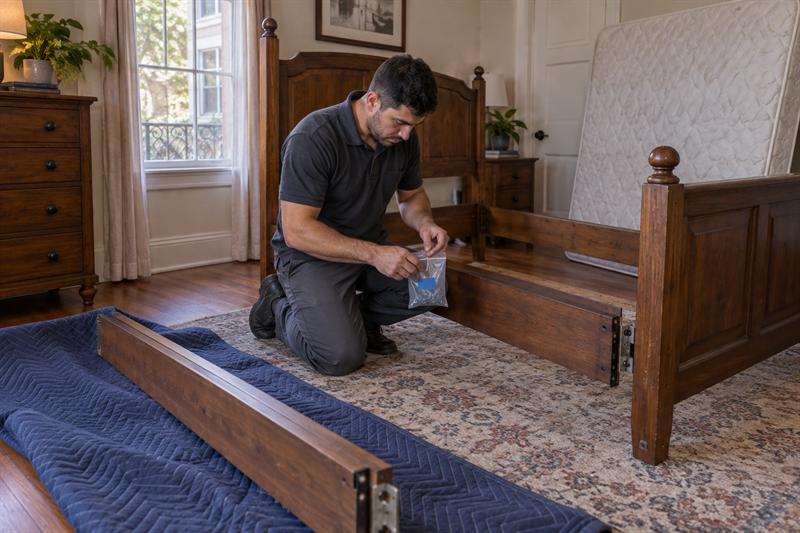
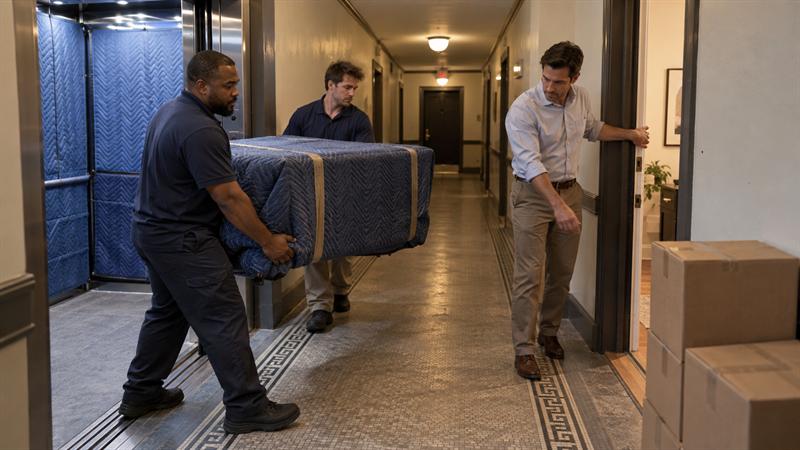
A moving date does not reserve the curb or elevator needed for the move. If management provides restricted moving hours, or the nearest loading space is around the corner, those details belong in the plan before the truck arrives.
H and U Express Moving offers home moves and hourly moving packages that include protective supplies. To evaluate those options, start with the access conditions that affect how belongings travel between apartments. Street permissions, building approvals, and the physical route are separate checks, and each needs attention at both addresses.
Key Takeaways
- Check the complete route from the truck to each apartment.
- Separate public-street loading permissions from private-building approval.
- Confirm any required elevator reservations, service entrances, and approved moving hours in writing.
- Share carrying distances, stairs, large-item measurements, and unresolved restrictions with the mover.
- Evaluate the access assumptions behind an hourly estimate, not just the published rate.
Start With an Access Check at Both New Orleans Addresses
Plan the origin and destination together. A workable loading arrangement at one apartment does not resolve a restricted unloading window at the other.
Record the Full Truck-to-Apartment Route
Describe the route, not just the floor number. “Second-floor apartment” leaves out whether the crew reaches it through a direct staircase or a gated courtyard with several narrow turns.
- Loading point: Where the truck is expected to stop.
- Carrying distance: The approximate distance from that point to the building entrance.
- Entry route: Gates, service doors, corridors, and access controls.
- Vertical access: Stairs, landings, and permitted elevators.
- Final approach: Doorways and turns immediately outside the apartment.
An inventory describes what needs moving, but not the work required to reach it. Leaving out the route can leave important work out of the plan. Share photos and approximate measurements for planning; uncertain clearances still need confirmation. For broader preparation, see the Apartment Moving Guide: Stairs, Elevators, Parking & Tight Spaces.
Identify Who Controls Each Access Decision
Assign each access question to the party that controls it. Approval from one party does not replace permission from another.
- Public street: Applicable city rules govern public parking and loading access.
- Private property: Management controls building reservations, private loading arrangements, and move policies.
- Moving operation: The mover assesses truck suitability, handling needs, and route constraints.
A manager’s approval to move furniture through the lobby does not itself authorize use of public curb space. Keep those checks separate so neither gets overlooked.
Confirm Moving-Truck Parking and Loading Access
Identify a lawful, workable loading location before treating nearby parking as part of the moving plan. Distance matters, but permission and truck suitability come first.
Check Public-Street Restrictions and Private Loading Areas Separately
Evaluate public curb space and private loading areas separately. An empty space is not proof that the truck can use it.
- Public street: Review posted restrictions and applicable City of New Orleans guidance for the proposed loading activity.
- Private loading area: Ask management about reservations, permitted hours, truck clearance, and the entrance movers must use.
- Either location: Trace the carrying route and identify obstacles between the truck and apartment.
If the closest space does not accommodate the truck or loading operation, identify another lawful location. Tell the mover how that changes the route.
Find Out Whether Authorization or a Reservation Is Required
Requirements depend on the proposed location and use. Do not assume every New Orleans apartment move needs the same permit, or that a building reservation covers public-street access.
For the proposed loading location, establish:
- Which authority or property manager controls approval?
- Does the loading activity require authorization or a reservation?
- If approval is required, who obtains it and how is it confirmed?
- What location and time window does the approval cover?
Check applicable official city instructions for public-street procedures. Do not assume cones create approval to load, and avoid plans that block traffic.
Recheck Closures and Identify a Lawful Backup Location
Recheck access close to moving day because a previously workable route can become unavailable. Construction, event restrictions, and weather disruptions call for current information rather than assumptions from an earlier visit.
- Review relevant City of New Orleans traffic notices and local road-closure updates.
- Reconfirm any private loading arrangement and the building entrance with management.
- Discuss a lawful alternative and its carrying route with the mover.
A backup location that adds distance changes the work being planned. Share that change before arrival rather than leaving the crew to discover it with a loaded truck.
Reserve Elevator Access and Check the Handling Route
An elevator helps only when movers are allowed to use it and the belongings fit the complete route. Availability and physical suitability are separate checks.
Confirm Reservations, Approved Hours, and Service Entrances
Get the elevator arrangement in writing, including how the crew reaches it. A reservation does not resolve a locked service entrance or an unavailable loading dock.
- Which elevator may movers use?
- Is a reservation required, and is use exclusive or shared?
- What moving hours apply?
- Which entrance and loading area connect to the elevator?
- Who unlocks doors or activates access, if needed?
Permission to use an elevator is not the same as being able to reach it. If access requires someone’s help, name that person and establish how the crew will reach them.
Check Doorways, Elevator Dimensions, and Turning Space
Check the approach and exit as carefully as the elevator cab. A large item must pass through every doorway and turn along the route.
- Measure relevant furniture dimensions and elevator door openings.
- Record usable cab dimensions and tight corridor turns.
- Include stair widths and landings where stairs are part of the route.
- Flag uncertain items for review rather than assuming they will fit.
For example, a sofa could fit inside an elevator but fail to make the turn from a narrow hallway into the doorway. Cab dimensions alone would not reveal that problem. Discuss clearance for large or fragile items with H and U Express Moving before move day, rather than waiting to see whether a doorway fits.
Get Building Move Rules in Writing
Use the property’s written instructions to establish what the building requires. They give the resident, management, and mover a shared reference instead of relying on different recollections of a conversation.
Confirm Documentation, Deposits, and Protection Requirements
Request the building’s move policy rather than assuming it matches another New Orleans property. Ask which of the following apply:
- Approved move-in and move-out hours.
- Required insurance documentation.
- Move deposits, fees, or reservation conditions.
- Elevator padding and common-area protection.
- Rules for service entrances, loading areas, and access arrangements.
A certificate of insurance provides insurance information; it does not guarantee that every loss is covered. Included protective supplies also do not automatically satisfy every property’s requirements. Compare the building’s instructions with the planned documentation and protection to identify any gaps.
Assign Responsibility for Approvals and Move-Day Access
Give each access task an owner. A reservation or document can remain unfinished when the resident assumes the mover handles it and the mover has not agreed to do so.
- Documentation: Identify who submits it and receives approval.
- Reservations: Identify who books the elevator or loading area.
- Arrival access: Name the person who opens doors or meets the crew, if required.
- Backup contact: Establish who can resolve access problems if the primary contact is unavailable.
Keep confirmations together and share relevant details before arrival. For the broader arrival sequence, see What to Expect on Moving Day.
Resolve access gaps before finalizing the moving arrangement. The plan needs closer review if:
- No lawful truck loading location has been identified.
- The building requires an elevator reservation, but none is confirmed.
- The two buildings allow moves during incompatible windows.
- A large item must pass through a tight doorway or turn that has not been assessed.
Send these specific gaps to H and U Express Moving with both addresses and the building instructions. Obtain any missing permissions from the responsible authority or manager, and discuss the unresolved route and scheduling questions with the mover before treating the plan as complete.
Coordinate Building Windows and Understand the Hourly Estimate
Evaluate an hourly estimate against the actual access plan. The published rate and the amount of work required are different parts of the calculation.
Make Sure Move-Out and Move-In Windows Work Together
Compare both buildings’ permitted hours against the full sequence: loading, travel, and unloading. Two confirmed reservations do not necessarily form a workable schedule.
For a hypothetical example, suppose the destination building’s move-in window closes before the origin building’s move-out window allows loading to complete. Both reservations exist, but the sequence cannot work. Adjust the reservations around the planned work rather than expecting travel and unloading to fit into leftover time.
Understand How Access Conditions Can Affect Labor Time
Access restrictions affect how the crew performs the work. Waiting and longer carrying routes can increase the time needed even when the inventory stays the same.
- Shared elevator: Other users can interrupt the loading or unloading sequence.
- Distant loading point: Each carrying trip covers more ground.
- Stairs and tight landings: Items can require a different handling approach.
- Unavailable entrance: Work using that route stops until access is restored or another approved route is established.
A clear hourly price does not, by itself, establish the total time required. Evaluate H and U Express Moving’s hourly packages alongside the access details you provide, and review the moving agreement for applicable billing terms.
Choose Additional Services Only When They Address a Specific Constraint
Choose the service that addresses the actual obstacle. More moving help does not replace a missing building approval.
- Incomplete preparation: Professional packing services help with belongings that still need packing; they do not create elevator availability.
- Occupancy dates that do not align: Short- or long-term storage provides an option between addresses, with additional handling and cost.
- Protection requirements: Compare included protective supplies with the building’s instructions to identify anything else required.
For a short access delay, first examine whether the building windows can be coordinated. Storage is a separate logistics decision, not the default answer to every scheduling conflict.
Share This Apartment Access Checklist Before Finalizing Your Move
Give the mover one access summary covering both addresses. Separate confirmed details from open questions so an unresolved restriction does not look like a completed arrangement.
- Addresses and apartment numbers: List both ends of the move.
- Floors and stairs: Describe vertical access and landings.
- Loading locations: Identify where the truck is expected to stop and the status of any required approval.
- Carrying routes: Include approximate distances, gates, corridors, and service entrances.
- Elevator arrangements: Record any reservations, permitted hours, and shared or exclusive use.
- Building instructions: Include protection rules and documentation requirements.
- Management contacts: Identify who controls arrival access and resolves questions.
- Large-item details: Include dimensions and relevant route photos.
- Unresolved issues: List missing approvals, measurements, and scheduling conflicts.
Share photos directly with the mover and keep entry codes or sensitive security details out of shared checklists. For the broader information needed alongside this checklist, see What Information to Share When Requesting a Moving Quote.
Use this access summary when discussing H and U Express Moving’s services. Connect requests for home moving, packing, storage, or large-item handling to the specific task involved. A packing backlog, a gap between occupancy dates, and a tight furniture route need different responses; listing the constraint makes the service discussion more useful.
New Orleans Apartment Moving Access FAQs
Do I Need a Parking Permit for a Moving Truck in New Orleans?
Parking authorization depends on the loading location and proposed use. Building approval does not itself authorize use of public curb space. For street loading, follow the applicable City of New Orleans parking or permitting instructions for that location and activity. Private loading areas follow separate property rules.
Who Is Responsible for Reserving the Apartment Building’s Elevator?
The building’s reservation process determines who must arrange elevator access; do not assume it is the mover. Establish responsibility through management’s instructions and keep the confirmation. A mover’s arrival time and an elevator booking are separate arrangements, so confirming one does not confirm the other.
What Should I Do if the Moving Truck Cannot Load Near My Apartment?
Identify a lawful alternative loading location and share the full carrying route with the mover. Include approximate distance, stairs, gates, and service entrances. A farther loading point changes the route used for repeated trips, which can affect planning even when the apartment floor and belongings remain unchanged.
Does My Apartment Building Need a Certificate of Insurance From the Mover?
Some buildings require a certificate of insurance; others do not. If required, share management’s exact documentation instructions with the mover so the mover can provide the requested papers. A certificate of insurance provides insurance information; it does not guarantee coverage for every potential loss during the move.
Can Building Restrictions Change My Apartment Moving Estimate?
Yes. Building restrictions can change the labor time or schedule assumed in an estimate. Waiting for a shared elevator or carrying belongings from a more distant loading point can add time without changing the hourly rate. Review the moving agreement for how those conditions affect the final charge.
Conclusion: Confirm Access Before Finalizing Your Moving Plan
Contact H and U Express Moving to discuss your apartment move with both addresses’ access details in hand. The real issue is not simply finding parking or an elevator. Permission, physical fit, and timing must all work together. Unresolved gaps can leave the crew waiting or require a different handling plan.
Gather the building instructions, complete the checklist, and send confirmed details and open questions with your preferred moving date. Addressing them now gives you time to resolve permissions and coordinate reservations before arrival. Start that discussion with H and U Express Moving about Home Moves in New Orleans, LA.