Before the Movers Arrive: How to Prepare for Moving Day
What happens before the crew arrives shapes how smoothly loading begins. Problems can start when the truck has nowhere practical to park, boxes are still open, an elevator was not reserved, or large furniture was not mentioned in advance.
For a more detailed preparation plan, use this room-by-room home checklist for movers. The goal is not a perfectly empty house. The goal is clear access, packed belongings, and a move plan everyone understands.
Confirm Parking, Entry, and Building Access
Confirm where the moving truck can park at both addresses. Share gate codes, building instructions, loading-zone rules, elevator procedures, and stair details before move day.
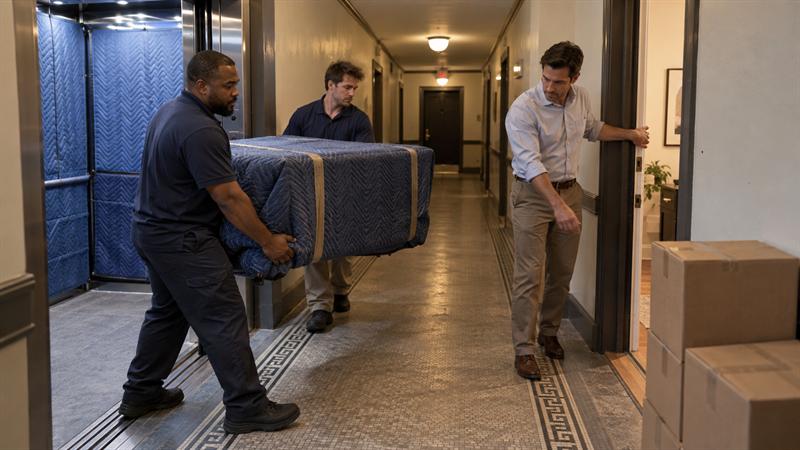
It is easy to focus on what is inside the home and overlook the route between the home and the truck. Long carrying distances, blocked entrances, tight stairwells, and elevator delays can slow the workflow. Apartment moves need particular attention because parking, shared elevators, and building move windows can affect the schedule.
Finish Packing or Confirm Packing Help
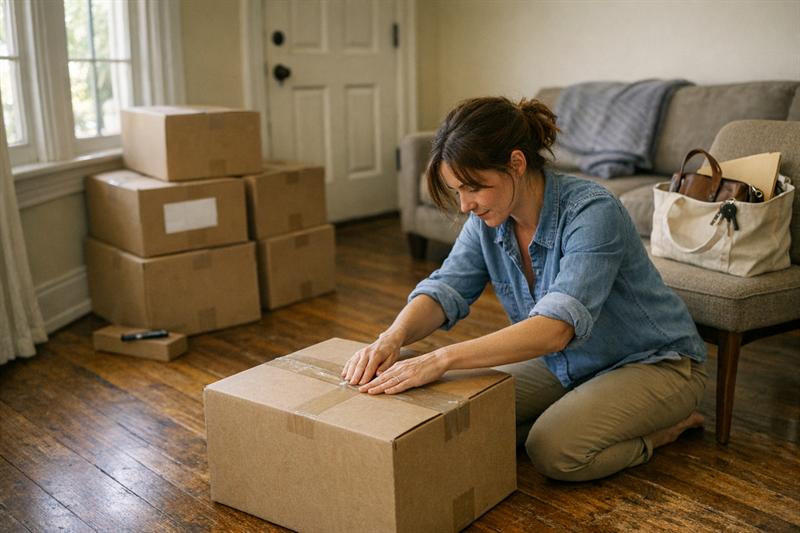
Boxes should generally be closed, taped, and labeled before loading begins unless professional packing is part of the scheduled service. Loose items require sorting and handling when the crew should be focused on loading.
Packing and moving are separate tasks. If the kitchen, fragile décor, artwork, or several rooms are still unfinished close to move day, professional packing may be more practical than trying to complete everything while movers are onsite.
Keep Essentials and Personal Items Separate
Keep medications, identification, keys, chargers, important paperwork, valuables, and overnight basics with you. Set these items aside in an essentials bag or create a clearly marked area that is not part of the move.
These items are commonly needed during the first hours in a new home. If keys, paperwork, or medication end up in a loaded box, a simple task can become harder to manage.
Identify Large, Fragile, or High-Priority Belongings
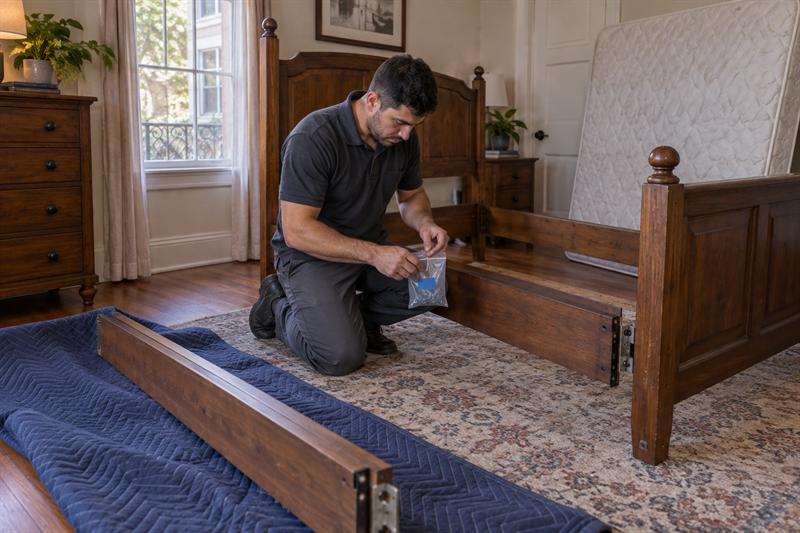
Point out oversized furniture, glass pieces, antiques, fragile belongings, and items with special importance. Mention narrow doorways, tight stairs, disassembly needs, or difficult access routes as early as possible.
A large item discovered after loading has started may require a different approach because of the doorway, stairwell, or destination route. Early details give H and U Express Moving a clearer basis for planning the handling approach, protective supplies, and workflow. For more guidance, read what items require specialty moving services and why it matters.
What Happens When Movers Arrive?
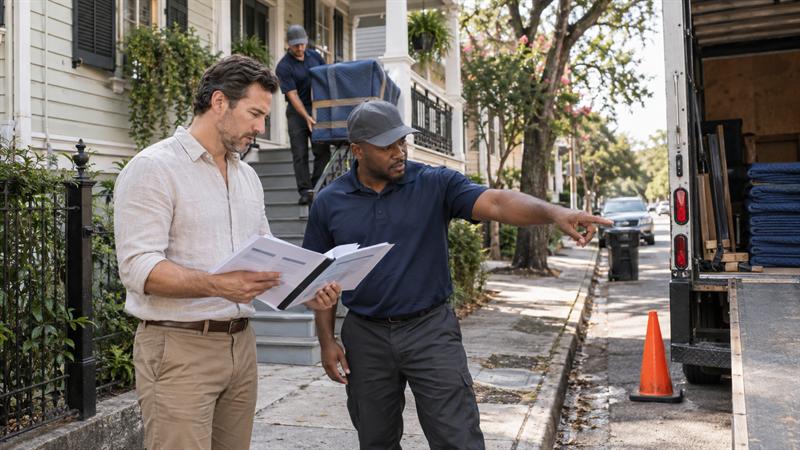
When movers arrive, the first step is usually an initial walkthrough of the home and a review of the move plan. This gives the customer and crew a chance to align on access, belongings being moved, items that need extra attention, and priorities at the destination.
The Initial Walkthrough
The crew may review the rooms, entry points, stairs, hallways, and belongings included in the move. Use this time to identify what stays behind, what needs extra care, and any areas with restricted access.
The walkthrough is more than an introduction. It helps create a workable picture of the job before furniture and boxes start moving. If a room was added, a storage area was overlooked, or an item needs to remain in place, address it before loading begins.
Review the Move Plan and Priorities
Confirm the destination address, room-placement preferences, and any timing details that affect the day. Let the crew know which furniture belongs in specific rooms and whether certain boxes should remain easy to access.
Accurate information shapes the handling plan. Extra rooms, unlisted furniture, difficult access, and special items can change the work involved. The earlier these details are clear, the easier it is to organize the move around the actual home rather than an incomplete description.
Ask Questions Before Loading Starts
Ask questions about the day’s workflow before loading begins. This is the right time to clarify access concerns, special belongings, and room priorities at the new home.
Once the truck is loaded, changing the plan can become more complicated. Clear decisions at the start help prevent unnecessary backtracking later in the day.
How Movers Protect and Prepare Belongings for Loading
Furniture protection is part of preparing belongings for handling and transport. H and U Express Moving’s hourly moving packages include protective supplies that can be used based on the item, its condition, and the route through the home.
Protective Supplies Are Part of the Moving Workflow
Protective materials can help reduce unnecessary rubbing, shifting, and contact while items are carried and loaded. A sofa moving through a narrow hallway may need a different approach than boxed kitchen items or a table moving through a wide ground-floor entry.
Protective supplies are part of preparing furniture and other belongings for the route from room to truck and from truck to destination.
Clear Paths Help the Crew Work More Efficiently
Clear hallways, stairs, doorways, and entry areas before the crew arrives. Keep boxes grouped by room, but do not place them where they block exits or create a tripping hazard.
With hourly moving, unnecessary back-and-forth adds time quickly. This becomes more noticeable when boxes are scattered across walkways, furniture has not been cleared from the route, or customers are still deciding what is going. Clear paths give the crew room to work safely and keep loading organized.
When Professional Packing Is the Better Option
Professional packing can be useful when fragile items, complicated rooms, or limited time make self-packing unrealistic. It may be especially helpful when the kitchen, breakables, artwork, or several rooms are still unfinished.
If packing is still a major task when moving day is close, it should not be treated as a small last-minute detail. Packing unfinished rooms while the move is underway can lead to delays and make it harder to keep related belongings together.
During Loading: What to Expect Once the Move Is Underway
During loading, movers generally work through the home in an organized sequence while keeping the access route clear. The customer’s role is to remain available for questions, not to direct every lift or stand in the crew’s working path.
Movers Typically Work Through the Home in an Organized Sequence
Crews may work from rooms and areas that are ready for loading. Labels show where boxes belong at the destination, while clear instructions help prevent items from being loaded by mistake.
Mark items that are staying and keep them separate where possible. Donation piles, a family member’s belongings, or furniture meant to stay behind can be placed too close to moving items. Once loading is underway, unclear separation can create avoidable confusion.
What Can Affect the Pace of a Move?
Several conditions can affect how quickly a move progresses:
- Extra items or rooms that were not included in the original move details.
- Loose belongings that still need packing or sorting.
- Long walks to the truck, stairs, elevators, or limited parking.
- Large or fragile items that require more preparation and handling.
- A destination that is not ready for unloading or room placement.
These details can cause a move to take longer than expected. If you see open boxes, blocked paths, unclear room instructions, or a new home that is still inaccessible, address those issues before loading begins when possible.
What Customers Should Do While Movers Are Loading
Stay available to answer questions about items, rooms, and access. Use the loading period to make a personal check for keys, documents, medications, chargers, and anything else you need to keep with you.
Do not wait until the truck is full to begin looking for essentials. At that point, an item may no longer be easy to locate while the rest of the move continues.
When the Move Needs a Different Plan
If your home still has open boxes, unlisted large items, limited truck access, or a destination that is not ready, update the plan before the crew starts loading.
- Parking is far from the entrance, restricted, or not confirmed.
- An elevator reservation, gate code, or building requirement has not been arranged.
- Fragile, oversized, or difficult-to-move items have not been discussed.
- The new home does not have clear room placement or available space for all belongings.
These conditions can interrupt the move after the crew is already onsite. Give H and U Express Moving a complete update on access, packing, special items, and destination readiness so the move plan reflects the work that needs to be done.
At the New Home: Unloading, Room Placement, and Storage Options
Unloading works best when the new home is ready for clear directions. The move is not complete until boxes and furniture are placed where they need to go and the home has been checked.
Make Room Placement Simple and Clear
Use room labels on boxes and decide where major furniture belongs before unloading begins. Start with essential spaces such as bedrooms, bathrooms, and the kitchen if you need the home functional quickly.
Furniture placement matters because moving heavy pieces twice creates extra work. If you know where the bed, sofa, dining table, and major storage pieces belong, the crew can place them once instead of rearranging them after the initial unload.
Be Ready for Access Details at the Destination
Confirm parking, gate codes, room numbers, stairs, elevators, and building rules at the new address. If possible, inspect the route from the truck area to the home before delivery begins.
Pickup access and delivery access are equally important. A move that loads smoothly can slow down at the destination when there is no loading area, an elevator is unavailable, or the route into the home is not clear.
When Storage May Help
Storage may be useful when the timing between homes does not line up. A delayed closing, renovation, temporary housing period, or smaller destination can leave belongings without a place to go on move day.
Short-term storage can fit a temporary gap. Long-term storage may make more sense for belongings that will not be used in the new home soon. This guide to short-term versus long-term storage explains the differences and the situations each option can address.
The Final Walkthrough: What to Check Before Movers Leave
The final walkthrough is the last practical check before the move is complete. Do not rely on memory after a long day. Walk through each area methodically.
Final Walkthrough Checklist
- Check every room, closet, cabinet, attic, garage, shed, balcony, and outdoor storage area at the pickup location before departure.
- Look for keys, remotes, small belongings, and items removed from shelves or walls.
- Confirm that furniture and labeled boxes were placed in the intended rooms at the destination.
- Raise remaining questions before the crew leaves.
- Keep move-related paperwork and contact information organized.
Small storage areas and items kept on shelves or mounted on walls are easy to overlook because they sit outside the main loading path. A systematic check helps catch them before the crew leaves the pickup location.
Do Not Rush the Last Review
Use a room-by-room approach rather than walking quickly through the home. The final walkthrough is for confirming that the move has been reviewed and any immediate questions have been addressed.
It does not mean every box must be unpacked or every room fully set up. The outcome is clarity: the home has been checked, placement questions have been handled, and there are no obvious items left behind.
Common Moving-Day Delays and How to Avoid Them
Many moving-day delays begin before the crew arrives. They often stem from incomplete preparation, missing access information, or last-minute changes that were not part of the original move plan.
Delays to Address Before the Crew Arrives
- Unpacked loose items: Finish boxing, taping, and labeling, or arrange packing help before the scheduled move.
- Blocked pathways: Clear hallways, stairways, entryways, and loading routes.
- Parking or elevator issues: Confirm building logistics with the property manager or building staff.
- Extra or unlisted items: Share an accurate picture of every room, storage area, and major item being moved.
- Large or fragile belongings: Communicate special-handling needs before the move date.
- Unclear room placement: Label boxes and decide where major furniture belongs before unloading starts.
Ignoring these details can create a chain reaction. Packing runs into loading, loading runs into access issues, and unloading slows down because the destination plan is unclear. Preparation does not eliminate every variable, but it removes obstacles that commonly interrupt the move.
Key Takeaways: How to Have a More Predictable Moving Day
- Confirm parking, access, elevators, gates, and building rules at both addresses.
- Have boxes packed, taped, labeled, and ready unless professional packing is part of the plan.
- Use the initial walkthrough to identify special items, belongings that stay behind, and destination priorities.
- Keep documents, medications, keys, chargers, and valuables with you.
- Use walkthroughs at the pickup and destination locations to check for overlooked items and confirm placement before the crew leaves.
A more predictable moving day comes from clear information, ready access, and decisions made before the truck is loaded. Common disruptions include unfinished packing, unclear routes, missing instructions, and special items discovered too late.
Planning a Home Move in New Orleans?
The real challenge on moving day is not simply getting belongings from one address to another. It is keeping access, packing, special-item handling, room placement, and final checks organized from start to finish. When those details are left unresolved, the move can slow down and create unnecessary complications.
H and U Express Moving can help households plan home moves with hourly packages that include protective supplies, along with packing, storage, and support for large or fragile belongings when those services are needed. Starting the conversation before move day gives you time to confirm access, packing needs, and destination instructions.
Frequently Asked Questions
What should I do before movers arrive?
Before movers arrive, make sure the home is accessible, boxes are ready to load, and move details are clear. Confirm truck parking, gate codes, elevator reservations, stairs, and building rules at both addresses. Boxes should be closed, taped, and labeled by room unless professional packing is included.
The important distinction is between being organized and being ready for loading. A home does not need to look empty, but the crew needs clear routes through hallways, doorways, and stairs. Open boxes and blocked paths can slow the move immediately.
Do I need to be there when movers arrive?
You or an authorized decision-maker should generally be available when movers arrive. The initial walkthrough is when the crew can confirm access, identify items that stay behind, review special belongings, and understand room priorities at the new home.
You do not need to supervise every item being carried. Your role is to answer the questions only the household can answer, such as whether a piece is moving, where it belongs, or whether a box is high priority.
Should everything be packed before movers arrive?
Everything should generally be packed before movers arrive when the planned service is loading and transportation only. Closed, taped, labeled boxes are faster to load and easier to place correctly at the destination.
Packing and loading are different tasks. If fragile belongings, kitchens, or several rooms are still unfinished, the move needs a packing plan rather than last-minute sorting while the crew is onsite.
What should I keep with me on moving day?
Keep medications, identification, important documents, keys, chargers, valuables, and overnight essentials with you. Put them in a dedicated bag or a clearly marked area that will not be loaded.
These items are often needed before the home is fully set up. Losing access to keys, paperwork, or medication inside a truckload of boxes can create an immediate inconvenience.
What do movers need to know before they start loading?
Movers need accurate details about parking, access, stairs, elevators, extra rooms, large furniture, fragile belongings, and destination-room priorities. A narrow stairway, restricted loading area, or item that needs disassembly can change the handling plan.
Complete information helps match the move plan to the actual home. The challenge is not that a detail changes; it is learning about it after loading has already started.
What should I check before the movers leave?
Before the crew leaves the pickup location, check each room, closet, cabinet, garage, shed, balcony, and storage area. At the destination, confirm that furniture and labeled boxes were placed in the intended rooms and raise remaining questions while the crew is still present.
Small storage spaces and items removed from walls or shelves, including remotes, keys, and small personal belongings, are easy to overlook. A room-by-room walkthrough is more reliable than trying to remember everything at the end.