Why the Details in Your Moving Quote Request Matter
To request a moving quote, share your move date, pickup and destination locations, home size or inventory, access details, large or fragile items, and any packing or storage services you need.
A moving quote starts with the scope of the work. Movers need to understand how much is being moved, the route from the home to the truck, the route from the truck to the destination, and any services needed before or after transportation.
Two homes with the same number of bedrooms do not always require the same plan. A furnished two-bedroom apartment with an elevator reservation, limited parking, and a storage locker differs from a two-bedroom house with a driveway and ground-floor access. A quote request that only says “two-bedroom move” may leave out details that affect the work.
- Preferred move date and timing flexibility
- Pickup and destination locations
- Home type, room count, and storage areas
- Major furniture and unusually heavy or fragile items
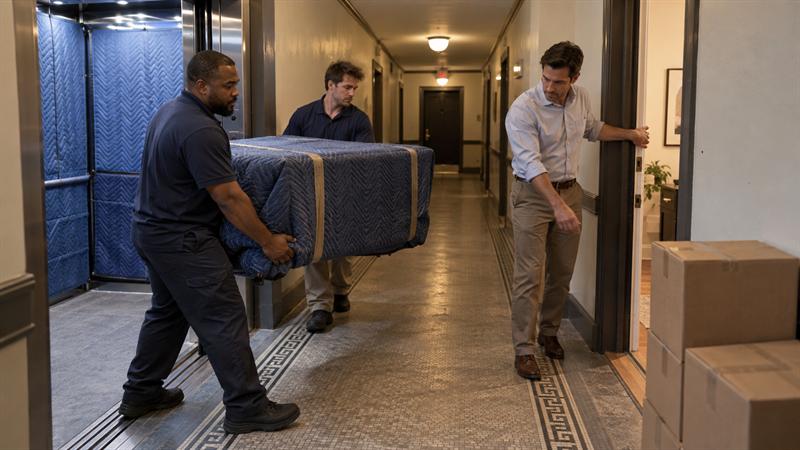
- Stairs, elevators, parking, gates, and walking distance
- Packing, storage, disassembly, or other requested help
A complete description does not mean every detail will stay the same. It gives the moving company a practical starting point and makes it easier to adjust the plan if the scope changes.
Start With the Basic Move Details
Share Your Preferred Move Date and Timing Needs
Share the date you want to move and whether that date is fixed or flexible. If the date depends on a lease ending, closing schedule, renovation progress, or building move window, include that context instead of waiting until every detail is final.
If you know your target week but not the exact day, you can still request a quote. A date range is often enough to start the conversation, especially when the move depends on another event.
- Your preferred moving date
- Any flexibility around the date or time
- Lease, closing, or property access deadlines
- Building-approved move hours, if they apply
- When the main decision-maker is available to answer questions
Provide Both the Pickup and Destination Locations
Include the pickup and destination addresses when they are available. If the destination is not finalized, provide the expected area and property type, such as an apartment, condo, house, or storage unit.
Both locations matter because the more complicated part of a move is not always the home you are leaving. A ground-floor pickup can still require a different plan if the destination has upper floors, tight access, reserved elevator times, or parking farther from the entrance.
Include the Best Way to Reach You
Provide a current phone number and email address, along with the name of the person who can answer follow-up questions. That person should know the basics of the furniture, access conditions, schedule, and any building requirements.
When several family members are involved, one informed point of contact can help keep the quote conversation focused and reduce conflicting information about the move.
Describe the Size and Scope of Your Move
Share Your Home Type, Room Count, and General Furnishing Level
Start with the type of home and the number of rooms being moved. Then add a practical description of how furnished the home is. A lightly furnished two-bedroom apartment and a fully furnished two-bedroom home with a home office, garage, and patio do not represent the same amount of work.
- Studio, apartment, condo, townhouse, or house
- Number of bedrooms and bathrooms
- Home office, den, or additional living spaces
- Garage, attic, shed, storage locker, or storage unit
- Balcony, patio, porch, or outdoor furniture
- Whether the home is lightly, moderately, or heavily furnished
Include storage areas as well as main rooms. Garages, attics, sheds, lockers, and closets may contain extra boxes, tools, holiday items, patio furniture, or unused furniture that add to the move scope.
Mention Major Furniture and Large Household Items
You do not need to list every lamp, book, or kitchen utensil. Focus on furniture and household items that take up truck space, require more handling, or affect how the crew moves through the property.
- Sectional sofas and large recliners
- King-size beds, bed frames, and dressers
- Dining tables, china cabinets, and large desks
- Wardrobes, entertainment centers, and shelving units
- Large appliances and exercise equipment
- Patio sets, grills, and bulky outdoor items
Grouping smaller items is often more useful than guessing at an exact count. For example, “a furnished two-bedroom apartment with about 20 boxes” gives a clearer picture than “a small move” with no explanation. If you are still packing, say so. An honest estimate is generally more useful than a number that leaves out closets, cabinets, or storage areas.
Do Not Forget Storage Areas and Outdoor Items
Storage units, garages, sheds, attics, balconies, and outdoor spaces should be included in the original quote request. These areas are outside the main living space but may contain large or less visible items.
If belongings need to be held between move-out and move-in, mention that early. Storage changes a direct pickup-and-delivery move into a plan that includes handling, holding, and later delivery.
Share Access Details for Both Locations
Explain Stairs, Floor Level, and Elevator Access
State the floor level at both the pickup and destination. Include whether stairs are inside or outside, how many flights are involved, and whether an elevator is available.
If there is an elevator, explain whether it must be reserved, whether the building has specific move hours, and whether there is a separate loading entrance. An elevator alone does not tell the full story. Missing access details can affect scheduling and moving-day logistics.
For a closer look at access details, read the apartment moving guide for stairs, elevators, parking, and tight spaces.
Describe Parking, Loading Areas, and Walking Distance
Share what you know about parking near both properties. The moving crew needs to understand how close the truck can get to the entrance and whether there are obstacles between the loading area and the home.
- Driveway, street, alley, or designated loading-zone access
- Limited street parking or gated entry
- Narrow driveways or restricted truck access
- Long sidewalks, courtyards, or walkways
- Distance from the parking area to the entrance
- Any property instructions already provided by management
Parking can appear simple until the truck arrives and the nearest workable space is farther away than expected. That can mean longer carrying distances and a different moving-day setup. If there is limited parking, a gated entrance, or a long walk from the curb to the unit, include those details in the quote request.
Mention Building Rules and Move Windows
Some apartments, condos, and managed properties have move-in and move-out requirements. These may include elevator reservation times, loading dock procedures, gate codes, insurance paperwork, approved move windows, or a property manager contact.
Not every building has the same rules, so avoid assumptions. Include any restrictions that affect timing, access, or entry. Sharing these details during planning can help the moving company prepare for the property’s requirements.
Identify Items That Need Extra Planning
Flag Large, Heavy, Fragile, or Awkward Items
Tell the moving company about belongings that are unusually large, heavy, fragile, high-value, awkwardly shaped, or difficult to move through standard doors and hallways. These items should be identified early because they may require added planning, protective materials, equipment, or a closer review of access conditions.
- Pianos and safes
- Large artwork, mirrors, and glass tabletops
- Antiques and delicate décor
- Oversized televisions and electronics
- Large appliances
- Bulky exercise equipment
- Furniture that is unusually heavy or difficult to fit through an entryway
The important distinction is not whether an item looks expensive. It is whether its size, weight, fragility, shape, or access route requires extra attention. See what items require specialty moving services for more examples of belongings that should be identified early.
Mention Disassembly and Reassembly Needs
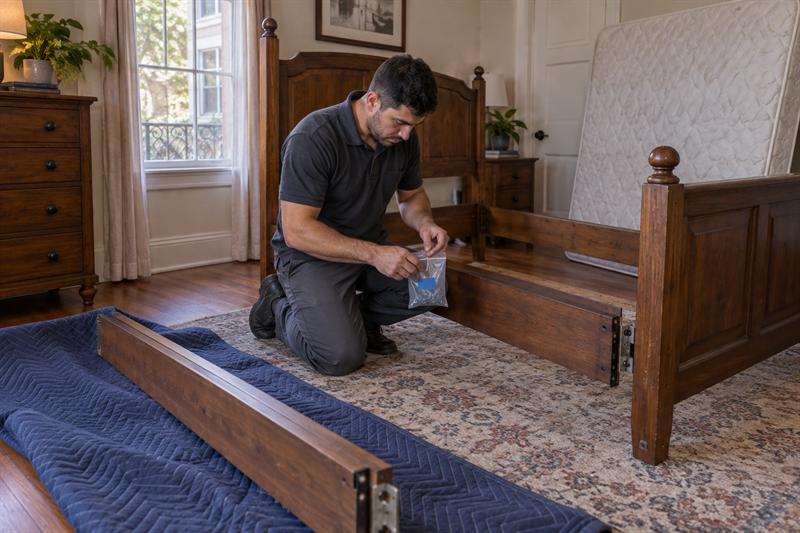
Include furniture that may need to be taken apart to move safely or fit through the available access route. Large bed frames, tables, modular furniture, shelving units, and bulky exercise equipment are common examples.
Furniture described only by room, rather than by size or structure, can create planning issues. A large bed frame may fit comfortably in a bedroom but still need disassembly before it can move through a narrow hallway or stairwell. If there are unusual assembly instructions or important hardware, mention that with the item.
When Photos and Measurements Can Help
Photos help when an item is difficult to describe or the access route looks tight. They are especially useful for oversized furniture, delicate artwork, unusually shaped pieces, pianos, safes, or items that must pass through narrow doors, stairways, or elevators.
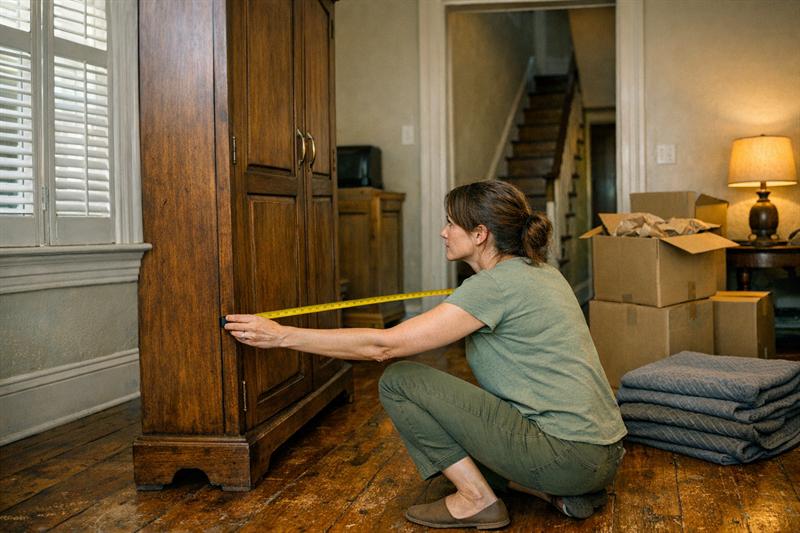
Approximate measurements are useful when clearance is the concern. Photos should support the written explanation, not replace it. A picture of a large item is more useful when paired with details about where it is located and what access challenge needs to be considered.
Mention Packing, Storage, and Additional Services Up Front
Let the Moving Company Know if You Need Packing Help
Tell the moving company whether your home is fully packed, partly packed, or still needs packing support. Packing is part of the move scope because it affects what needs to happen before loading begins.
- Full packing: Help is needed throughout the home, including rooms, closets, cabinets, and household contents.
- Partial packing: The customer packs some areas but needs help with selected rooms or categories.
- Fragile-item packing: Help is needed for items such as kitchens, glassware, artwork, electronics, mirrors, or delicate décor.
Partial packing is often practical for households that are comfortable handling clothing and everyday items but want help with fragile or time-consuming areas. State what is already packed and what still needs attention. That helps prevent a moving-day plan from being based on boxes that are not ready.
Share Any Short-Term or Long-Term Storage Needs
Storage should be part of the quote conversation when your move-out and move-in dates do not match. It also matters when a home is under renovation, a closing is delayed, or only part of the household is moving into the new space.
- Short-term storage: Useful when belongings need to be held during a temporary gap between locations.
- Long-term storage: Relevant when items will stay out of the home for a longer, less-defined period.
H and U Express Moving offers short-term and long-term storage options, so storage needs should be discussed before the move plan is set. When storage is added late in the process, coordinating the move may require changes because the belongings no longer have a direct destination.
Ask About Protective Supplies for Furniture and Fragile Belongings
When requesting a quote, mention furniture, glass, artwork, or other belongings that need protective attention. Ask what protective supplies and handling options are available for the items included in your move.
Protective supplies are part of planning, not a substitute for identifying difficult items. A glass tabletop, large mirror, or fragile piece should still be disclosed so the move plan accounts for the item and the route it must travel.
Moving Quote Checklist: Information to Gather Before You Call or Submit a Form
Before requesting a moving quote, gather your moving date, both locations, the size of the home, major furniture, access conditions, specialty items, and any packing or storage needs. This checklist gives the moving company the information needed to understand the move without requiring a perfect room-by-room inventory.
- Preferred move date and how flexible the timing is
- Pickup address and destination address, or expected destination area
- Home type, room count, and overall furnishing level
- Garages, attics, sheds, patios, balconies, lockers, and storage units
- Major furniture and an approximate number of boxes
- Large, heavy, fragile, awkward, or high-value items
- Items that may need disassembly or reassembly
- Floor levels, stairs, elevator availability, and reservation requirements
- Parking conditions, loading areas, gates, and long walking distances
- Building move windows, loading rules, and property-management instructions
- Whether you need professional packing services
- Whether you need short-term or long-term storage
- Your best phone number, email address, and main point of contact
Key Takeaways
- A useful moving quote request explains the full move, not just the number of bedrooms.
- Both addresses matter because access conditions can differ at the pickup and destination.
- Major furniture, storage spaces, stairs, elevators, parking, and specialty items should be disclosed early.
- You do not need an exact count of every small item, but you do need an honest overview of the move.
- Packing and storage needs belong in the first conversation when they are part of the plan.
- Changes to large items, access, dates, or services should be shared as soon as they are known.
What You Do Not Need to Have Perfectly Figured Out Yet
You do not need a flawless inventory before requesting a moving quote. Waiting until every box is counted and every drawer is empty can create more delay than clarity.
You can still request a quote if you do not yet know:
- The exact number of boxes
- The final unpacking plan
- Every small item in the home
- Exact dimensions for ordinary furniture
- The final move date, as long as you can provide an expected range
The information that needs attention first is the information that changes the move scope. A king bed, storage unit, second-floor destination, elevator reservation, large glass table, or added storage period matters more than whether there are twelve or fifteen kitchen boxes. If you are still sorting or packing, say so. A clear estimate helps keep the plan aligned with the move.
Update Your Moving Company if the Scope Changes
A quote request should be updated when a meaningful part of the move changes. Minor household changes happen, but changes to size, access, timing, or services can affect how the move is planned.
- Large furniture is added or removed
- The destination address, floor level, or property type changes
- New stairs, elevator restrictions, or parking limitations are discovered
- Packing help is added because the home is not ready
- Short-term or long-term storage becomes necessary
- The move date or approved move window changes
Original details can change after a storage area is cleared, a building shares its move rules, or a new piece of furniture is added to the list. Updating those details early helps keep the plan tied to the actual move instead of an outdated version of it.
How H and U Express Moving Approaches Quote Planning
H and U Express Moving plans quotes around the full move scope. The furniture matters, but so do the spaces it comes from, the access route it travels through, and the services needed before or after the truck is loaded.
That approach is especially important when a move includes stairs, an apartment elevator, limited parking, a storage unit, large furniture, or fragile belongings. These details can shape the work from the beginning.
The goal is not to make customers create a perfect inventory alone. It is to identify the details that affect the move plan. Once the move date, locations, volume, access, specialty items, and service needs are clear, the quote conversation has a stronger foundation.
Frequently Asked Questions About Requesting a Moving Quote
What information do movers need to give a quote?
Movers generally need the preferred move date, pickup and destination locations, the size of the move, access details at both properties, large or fragile items, and any packing or storage services needed. A room count is helpful, but it does not tell the whole story.
For example, two furnished two-bedroom homes can require different planning if one has a garage and storage unit while the other has an elevator reservation and a long walk from the loading area. The key is to describe both what is moving and the route the belongings must take.
Do I need a complete inventory before requesting a moving quote?
No. An initial request does not require an item-by-item list of every box, lamp, or kitchen utensil. A practical overview is more useful at this stage: home type, room count, furnishing level, major furniture, storage areas, and items that need extra attention.
The details that matter most are the ones that change the scope. A sectional sofa, oversized bed, patio set, storage locker, large appliance, or heavy exercise equipment should be included. Exact counts of small household items do not need to delay the request.
Should I tell movers about stairs, elevators, and parking?
Yes. Stairs, floor level, elevator access, parking availability, and the distance between the truck and entrance should be shared for both locations. These details affect the access route, which is part of the work being planned.
An elevator also needs context. A building may require a reservation, restrict move times, or use a separate loading entrance. Movers need more than an address. They need to understand how the crew and belongings will get in and out of the property.
What items should I mention when asking for a moving quote?
Mention items that are unusually large, heavy, fragile, high-value, awkwardly shaped, or difficult to move through normal doors and hallways. This includes pianos, safes, artwork, mirrors, glass tabletops, oversized televisions, large appliances, bulky exercise equipment, and oversized furniture.
Also mention furniture that may need to be taken apart, such as large bed frames, modular pieces, shelving units, or tables that may not fit through the available access route while assembled. Photos and approximate dimensions are especially useful when a tight doorway, stairwell, or elevator clearance is part of the concern.
Should I mention packing or storage needs when I request a quote?
Yes. Packing and storage are part of the move scope when they are needed, so they should be included in the original request. Packing may involve the full home, selected rooms, or only fragile items such as kitchens, artwork, glassware, and electronics.
Storage changes the plan when belongings cannot move directly into the next home. The deciding factor is whether the move-out date, destination readiness, and delivery timing line up. When they do not, storage should be considered as part of the plan rather than treated as a last-minute solution.
What should I do if my move details change after I get a quote?
Update the moving company when a meaningful detail changes, such as adding large furniture, changing the destination, discovering stairs or elevator requirements, shifting the move date, or adding packing or storage needs.
Not every small change requires a new plan. The important updates are the ones that affect volume, access, timing, or services. Those are the details that determine whether the original scope still reflects the work that needs to be done.
Request a Moving Quote With a Clearer Move Plan
An incomplete moving quote request does not need every detail to be unknown to create a planning gap. When stairs, parking, storage spaces, large furniture, building rules, or service needs are left out, the quote may not reflect the move that needs to happen.
Gather the checklist information, confirm any building or parking requirements you already know, and give H and U Express Moving a clear overview of the move. H and U Express Moving can then help plan around the actual work involved, including home moves, packing, storage, and large or fragile-item handling.
Conclusion: A clearer quote request supports a clearer move plan. Request a moving quote from H and U Express Moving with your move details ready, so the conversation begins with the information that matters.