
Quick Answer: Most packing descriptions miss the workflow because they treat packing as a single task. Professional packers review the move scope, pack room by room, protect fragile and bulky items, label boxes by destination room, and hand organized boxes to the loading crew.
At H and U Express Moving, this sequence matters because New Orleans residential moves often involve narrow doorways, older stairwells, apartment elevators, and limited staging space. A packing day is not just boxes being filled. It sets up the load order and the unloading sequence for the destination home.
This article follows the packing day in operational order and shows what you should prepare, what stays out of the professional pack, and how the crew connects to loading and storage when needed.
What Professional Packers Do Before the First Box Is Opened
The first step is planning, not packing. The crew confirms scope, access, and supplies before touching items.
Reviewing the Move Scope and Service Level
The scope covers what is included, what is priority, and what the customer keeps separate.
Most interruptions begin when rooms are added after packing has started. A late addition pushes fragile items lower in the sequence and makes it harder to stay on schedule. Confirm the room list before the crew begins.
- Whether the move is full-service packing or partial packing
- Which rooms should be prioritized for the destination home
- Items the customer keeps separate, such as medications, original documents, and active electronics
- Large furniture that may need disassembly
Checking Access, Stairways, and Loading Conditions
Before items move, the crew checks the path they will travel.
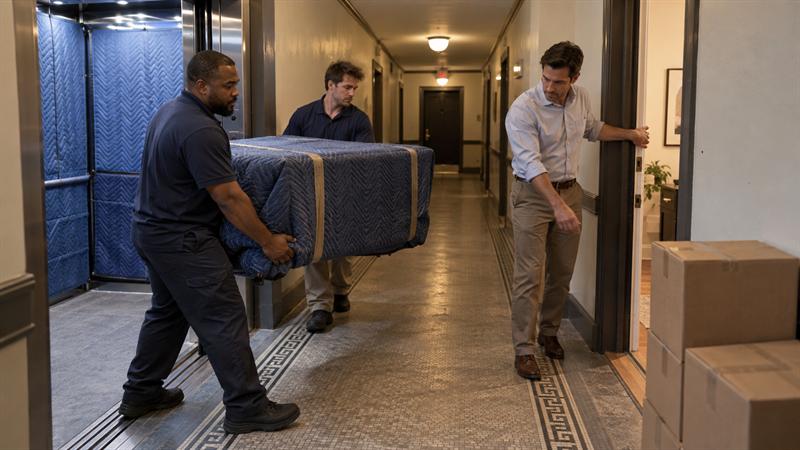
Older homes may have large living rooms but narrow hallways, tight stairwells, or limited outdoor staging. The packing plan can change when a dresser needs hardware removed, a mirror needs extra corner protection, or the staging route needs to be shortened. An access wait that is not confirmed before the crew arrives takes time away from packing and loading.
Confirming Supplies and Protection Materials
Professional packers match materials to the item, room, and load.
At H and U Express Moving, the published hourly moving packages include protective supplies, so the customer does not need to coordinate a separate box run first. Materials are selected based on room type and destination-home needs.
- Boxes sized for weight and item type
- Packing paper and wrapping for glass, dishes, and framed items
- Stretch film, tape, and markers for securing and identifying contents
- Furniture pads and corner protection for large pieces
The Room-by-Room Packing Workflow
Room-by-room packing controls weight, protection, and load order.
How Packers Prioritize Which Room to Start
Packers start with the rooms that need to work first on move-in day and the items that carry the highest protection needs.
If the kitchen is packed last, the household may still need plates, dishes, and basics during the first evening. The crew sets the room order with the customer during the scope review, using fragility, active use, and destination priority to guide the sequence.
- Kitchen and dining rooms are often covered when dishes and glassware need priority protection, usually sequenced around the household’s last use
- Bedrooms are covered when clothing and personal items need consistent room placement
- Living areas are covered after the main fragile rooms are protected
- Garage and storage spaces are covered when they hold bulk or lower-priority items
Box Selection, Item Placement, and Weight Management
The box size follows the weight and shape of the contents.
Heavy items go in smaller boxes so the load is easier to carry and the contents stay supported. Fragile items are centered and surrounded by cushioning. Labeling is completed before the box is closed and taped, so the room and contents are readable when the crew places it on the truck.
- Books, dishes, and tools go in small or medium boxes
- Clothing, linens, and pillows go in larger boxes
- Fragile items are separated from hard or heavy objects
- Each box is labeled before it is sealed
Wrapping, Padding, and Securing Fragile or Sensitive Items
Fragile rooms receive additional handling because the damage risk is higher and the destination home often needs those items first.
- Glass and ceramic items are interleaved with paper and placed upright
- Electronics are wrapped and labeled by room and contents
- Artwork and mirrors receive layered wrapping and corner protection
- Clothing is boxed or bagged based on size and destination needs
- Heirlooms and decorative pieces get extra padding and a priority load note
If you want a deeper reference for the household side, see how to pack fragile items safely for moving.
Handling Large Furniture and Appliance-Sized Items
Large furniture gets a separate handling plan when it affects the path to the truck.
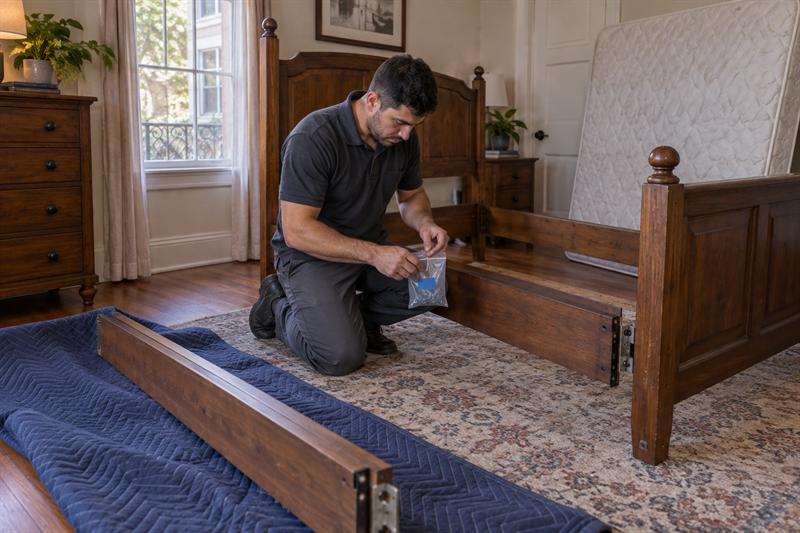
Beds, dressers, dining tables, and sectionals are reviewed during the scope review and access check. When a piece will not pass through doors or stairs as is, the crew disassembles it, removes hardware, and keeps the hardware with the piece.
The schedule takes a hit when a dresser is padded but not checked for hardware before the crew reaches a stairwell. The crew may stop to remove hardware, and the planned route can shift. Furniture that moves intact is wrapped with pads and protected at corners, legs, and protruding edges.
Labeling, Tracking, and the Handoff System
Labeling connects the packing crew, the loading crew, and the first night at the destination.
Why Room Labels Are More Than a Courtesy
Room labels are a load sequence tool, not just a marking step.
Every box should show the destination room and a usable contents note. A color or number system agreed in the scope review helps the loading crew place related boxes in the same truck zone. A consistent label format keeps the unloading crew from having to read every box before placing it into a room.
- Loading follows the destination room plan instead of the nearest box first
- Unloading goes directly into the correct room
- The first night is less dependent on searching through boxes
Contents Lists and Inventory Clarity
A contents note gives the customer a way to verify items without opening every box.
The level of inventory detail depends on the service. Some crews keep a simple box number, room, and contents note. A simple note is not a full itemization, but it gives a reference point if one item seems missing after arrival.
How the Packing Crew Hands Off to the Moving and Loading Team
The packing crew hands the loading crew a sorted, labeled, and staged load.
Once a room is completed, the boxes are staged in the planned area, usually near the exit or loading side. The packing crew tells the loading crew which boxes are fragile, which are heavy, and which should go first for the destination home. When the handoff is clear, loading follows the room plan instead of filling the truck with whatever is nearest to the door.
What the Homeowner Should Prepare on a Professional Packing Day
Your role is to keep the crew on schedule, keep personal items separate, and keep access to the home clear.
Items Typically Kept Out of the Professional Pack
These items stay with the customer, even if they are in a room the crew is packing.
- Medications and prescriptions
- Original birth certificates, passports, deeds, and other important documents
- Jewelry and small valuables
- Active electronics with logged-in accounts
- Keys, access cards, and gate codes
- Pet food, pet medications, and immediate supplies
- Cash and personal items needed on move day
Asking the customer to keep these items separate helps avoid an evening search for medications, documents, keys, or immediate supplies.
Common Preparation Mistakes That Slow Down Packing Day
Delays on packing day often come from small unresolved choices, not from heavy furniture alone.
- Adding a room to the scope after the crew has started another room
- Not marking which rooms should be unpacked first at the destination
- Leaving bulky items in hallways that block the working path
- Delaying decisions about donations, disposal, or storage
- Not having one person available to answer scope questions
The same delays compound when the crew has to stop and ask about a room, a donation, an elevator reservation, or a missing point of contact. A clear room list and one person to answer scope questions keeps the crew moving. For a broader room-by-room baseline, see how to prepare for movers.
New Orleans Residential Access Considerations
New Orleans residential access changes how the crew stages boxes and protects furniture.
Older homes often have wider rooms and tighter passageways. Apartment buildings may require elevator reservation, building manager sign-off, or limited cart parking. The schedule absorbs the delay when access is not flagged before the move, but the crew can plan the route, padding, and disassembly decisions when access points are known in advance.
Scope checkpoint: A packing day needs a defined scope before the crew arrives if any of these apply.
- You are unsure which rooms the packing crew should cover.
- You have fragile items that need priority protection.
- You need the kitchen or bedroom functional the first evening.
- You have a tight schedule or a building access window.
When these conditions are present, the move needs a confirmed room list, access plan, and fragile-item plan before move day. H and U Express Moving uses published hourly moving packages with included protective supplies to make that scope visible before the crew starts.
Full Service Packing vs. Partial Packing
Full-service and partial packing solve different decision problems.
What Full Service Packing Covers
Full-service packing means the crew handles every room in the agreed scope.
The customer keeps personal and sensitive items out of the pack and confirms room priority. The moving company supplies the materials and applies the labeling system. This model works best for moves with tight timing, more fragile items, or a household that wants the packing handled by the crew before moving day.
What Partial Packing Looks Like
Partial packing gives the crew the rooms that need technique and gives the customer the rooms that need personal judgment.
- Scope: the crew packs selected rooms or item types while the customer packs the rest
- Supplies: the crew provides materials for its rooms, and the customer supplies materials for the rooms they pack
- Labeling: the same room and contents system should apply to both crew-packed and customer-packed boxes
- Best fit: homes where the customer has time for clothing, books, and lower-risk items
Choose full service when fragile rooms, tight timing, or first-night functionality drives the move. Choose partial packing when you have time to pack personal items and want the crew to handle the higher-risk rooms. If you are weighing the tradeoff more broadly, see professional packing vs DIY.
How Professional Packing Connects to Loading, Storage, and the Broader Move
Packing is the first part of the load, not a separate event.
The way boxes are built, labeled, and staged determines how fast the truck loads and how quickly the destination home becomes usable. If the move includes short-term or long-term storage, the packing crew can organize boxes by what is needed first and what can wait. That helps when the home is ready to leave before the next space is ready to receive everything. At H and U Express Moving, storage is treated as part of the move plan when the timing does not line up, and the hourly package structure keeps protective supplies, crew time, and loading in one coordinated plan.
When packing is disconnected from loading and storage, the first night becomes a search for where things went. The packing plan should already reflect the loading order and the rooms that must work first.
What to Ask Before Booking a Professional Packing Service
Before booking, ask the questions that clarify scope and access.
The answers tell you whether the provider is treating packing as a box task or a moving operation.
- Which rooms are included, which rooms are excluded, and how the hourly package is structured
- What packing supplies are included and what materials the customer needs to provide
- How boxes are labeled and whether the customer can set room priority for unloading
- Which large furniture pieces will be disassembled and how hardware is returned
- Who is the point of contact on packing day and how scope changes are handled
- How fragile or high-value items are documented during the move
Company approach: H and U Express Moving treats professional packing as a moving operation, not a separate task. The service team looks at the room list, fragile items, access conditions, loading order, and storage needs as one plan. For New Orleans residential moves, the hourly package structure keeps supplies, crew roles, and the fragile-item plan defined before move day.
Frequently Asked Questions
Do professional packers provide boxes and packing supplies?
Yes. In most full-service packing engagements, the moving company provides the core materials, including boxes in multiple sizes, packing paper, tape, stretch film, furniture pads, and markers. The quantity depends on room scope and item volume. In a partial pack, the crew usually supplies materials for the rooms it handles, while the customer supplies materials for the rooms they pack.
For a kitchen and dining pack, the crew brings wrapping materials or paper interleaving as part of the service rather than expecting the customer to find the same supplies before move day.
What should I keep out of professional packing?
Medications, original documents, cash, jewelry, active electronics, keys, access cards, and immediate supplies stay with the customer. This is a practical boundary, not a limitation of the crew. These items are easier to keep controlled, and they often fall outside normal move handling. If a high-value heirloom should be handled by the crew, note it during the scope review so it is treated as a special item rather than an afterthought.
Will professional packers disassemble and reassemble my furniture?
In most residential moves, yes, when the piece will not fit through the path intact. Beds, dressers, dining tables, and sectionals are common disassembly pieces. Hardware is bagged, labeled, and returned with the piece or boxed separately. The usual reason to avoid disassembly is when the piece is built in, anchored, or when disassembly would be impractical or would not improve the fit. If a dresser will meet a narrow stairwell, disassembly is often the more practical route.
Do professional packers unpack after the move?
Unpacking is usually a separate service line, not an automatic part of packing and loading. A provider may offer unpacking where the crew opens boxes, places items in labeled rooms, removes packaging, and does basic setup. The decision matters when the kitchen or bedroom needs to function immediately. In a staggered move or storage segment, unpacking priority identifies which rooms are opened first and which boxes go to storage first.
Is professional packing worth it for a small move?
It depends on fragility, time, and destination-side workflow, not square footage. A one-bedroom with mostly clothing and simple boxes is often practical to pack yourself. The same one-bedroom shifts when it includes fine china, glassware, a large bookcase, or a short window. The practical line is often partial packing: the crew handles the fragile rooms, and the customer handles personal rooms. If the main concern is damage risk or first-night function, professional packing can save total time even when the home is small.
How long does a professional packing day take?
It is driven by room count, item type, furniture disassembly, building access, and distance from the home to the truck. A one-bedroom partial pack can take a few hours. A four-bedroom full pack with furniture and a storage component can take a full day or more. The pre-move scope review is where the time range should be set, because a narrow stairwell or elevator wait changes the working day more than the number of boxes.
Key Takeaways
- Professional packing is a sequence of scope review, room-by-room packing, protection, labeling, and handoff.
- Room priority is set by fragility and destination-home need, not by hallway order.
- Labels are a coordination tool for loading, unloading, and first-night access.
- The customer still keeps medications, documents, valuables, keys, and immediate supplies separate.
- Full-service and partial packing differ in scope, material responsibility, and best fit.
- New Orleans access conditions shape staging, disassembly, and schedule risk.
Conclusion: What Makes a Professional Packing Day Run Smoothly
The real problem is not whether packing is hard. The problem is that an undefined packing service leaves scope, fragile-item handling, access, and load order open until the crew arrives. When those details are not set, the schedule slips, fragile rooms get less attention, and the destination home starts with boxes that do not match the rooms.
H and U Express Moving is the next step when you want that plan visible before the work begins. The company serves residential moves in New Orleans and uses published hourly moving packages with included protective supplies to make packing, large-item handling, and storage needs part of one service decision. Start with the room list, fragile items, access points, and the rooms that must work first. That review turns a service description into a work plan you can place on the calendar.