Packing for storage is different from packing for a move that ends the same day. Items may stay boxed longer than expected, so the goal is not just to fill boxes. It is to keep belongings protected, organized, and easier to retrieve later.
H and U Express Moving helps customers plan for common storage concerns, including boxes that need to stay accessible, furniture hardware that should remain with the right piece, and appliances that need time to dry before storage. A clear plan before moving day makes the storage portion of a move easier to manage.
Start With a Storage Plan Before You Pack
Decide what belongs in storage, how long it may stay there, and what you may need before the move is complete. Those decisions guide the boxes you use, the labels you create, and the way the unit is loaded.
A common mistake is using storage for everything that does not fit in the next home. That can fill the unit with unwanted items and make the belongings you do want harder to reach.
Decide What Should Go Into Storage
Sort belongings before packing begins. A simple four-group system can reduce unnecessary packing and make the storage unit easier to organize.
- Store: Items you intend to keep but do not need right away.
- Move directly: Daily essentials, medications, work items, important documents, and immediate move-in supplies.
- Donate or sell: Usable belongings that no longer fit your home or plans.
- Dispose of responsibly: Broken, expired, damaged, or unusable items that should not take up storage space.
If a box has no clear purpose after the move, it may not need to go into storage. Sorting first keeps the unit focused on items you genuinely intend to keep.
Consider How Long the Items May Be Stored
Short-term storage usually requires easier access. Long-term storage calls for more attention to cleaning, drying, protective materials, and the storage environment.
A box needed in a few weeks should not be buried behind furniture. Belongings stored for months should be packed to stay organized over time. For a closer comparison, review short-term versus long-term storage needs.
Even when storage is expected to be brief, pack carefully. Closing dates, renovations, leases, and delivery schedules can change.
Identify Belongings You May Need Before the Move Is Complete
Create an “access first” group before packing the rest of the home. Without that step, a needed charger, tool kit, seasonal item, or household record can end up at the back of a tightly packed unit.
- Basic tools and hardware needed for reassembly
- Chargers, remotes, and electronics accessories
- Seasonal clothing or children’s items
- Household records and move-related paperwork
- Bedding, small kitchen basics, or other items needed before final move-in
Label these boxes clearly and load them last. Place them near the entrance so they can be reached without moving furniture or rebuilding a stack of cartons.
Clean and Dry Belongings Before They Go Into Storage
Clean and fully dry belongings before sealing them into boxes, covers, or containers. Dust, food residue, moisture, and odors can be harder to address after items have been enclosed and stacked away.
Rushed packing can lead to items being boxed before they are dry. Taking time to complete this step helps avoid avoidable storage problems later.
Why Cleaning Matters Before Storage
Clean items are easier to pack and unpack. Start with places that collect residue or debris, including appliance interiors, kitchen drawers, furniture surfaces, and storage compartments.
- Remove crumbs and food residue from kitchen items and small appliances.
- Wipe down furniture surfaces, drawers, cabinets, and shelves.
- Empty trash bins, hampers, and containers before packing them.
- Check boxes and belongings for dampness before adding covers or tape.
The goal is not to turn packing into a full-house cleaning project. It is to avoid storing residue, moisture, and odors with belongings that may remain enclosed for an extended period.
Make Sure Washed or Cleaned Items Are Fully Dry
Build drying time into the moving timeline. Towels, bedding, clothing, upholstered pieces, appliance interiors, and cleaned furniture should be dry before storage.
If fabric feels damp, there is condensation, or an item has a lingering wet smell, it is not ready to be packed away. Let it dry before boxing or covering it, since enclosing damp belongings can make cleanup more difficult when storage ends.
Use the Right Packing Materials for Each Type of Item
The right packing material depends on what is being packed. Heavy books, framed glass, upholstered furniture, electronics, and documents do not need the same box, cushioning, or outer protection.
Using the largest available box for everything is a common packing mistake. It can result in cartons that are too heavy to lift comfortably, difficult to stack, and more likely to shift during transport.
Use Sturdy Boxes and Avoid Overpacking
Use sturdy cartons that fit the weight and size of the contents. Smaller boxes are generally better for dense items, while lighter and bulkier belongings can go into larger cartons.
- Pack books, tools, and other dense household items in smaller boxes.
- Use cushioning to fill gaps and reduce shifting inside cartons.
- Keep box weight manageable for lifting and stacking.
- Do not stack fragile cartons beneath heavy boxes.
- Seal and label each carton before it reaches the truck or storage unit.
Box selection affects more than packing speed. It influences how easily boxes can be moved, stacked, and found later without putting unnecessary pressure on lighter or more delicate contents.
Match Protective Materials to the Item
Choose protection based on what it needs to do. Furniture pads and moving blankets help separate finished surfaces during handling, while packing paper and cushioning help support dishes, lamps, décor, and other fragile items inside cartons.
- Use furniture pads or moving blankets for large furniture and finished surfaces.
- Use packing paper and cushioning for dishes, lamps, frames, and breakable décor.
- Use a suitable protective cover for mattresses and upholstered pieces.
- Use sturdy cartons for paper records and smaller household goods.
Wrapping everything in plastic is not a complete storage strategy. The item material, expected storage period, and storage environment determine what type of protection makes sense.
Prepare an Essentials and First-Access Box
Pack one box for items you are most likely to need before the storage period ends. This box matters when a schedule changes or a new home is not ready as expected.
Include basic tools, chargers, documents, bedding, seasonal items, and anything needed for a quick return visit. Mark it “access first,” add it to your inventory, and place it near the front of the unit.
How to Prepare Furniture for Storage
Furniture needs a plan before it enters storage. Decide what should be disassembled, keep components together, and protect each material based on how it will be handled and stacked.
Furniture issues can begin before loading. Loose hardware, uncovered glass, and bulky pieces that were not considered for access can create delays once the move is underway.
Disassemble Only the Furniture That Needs It
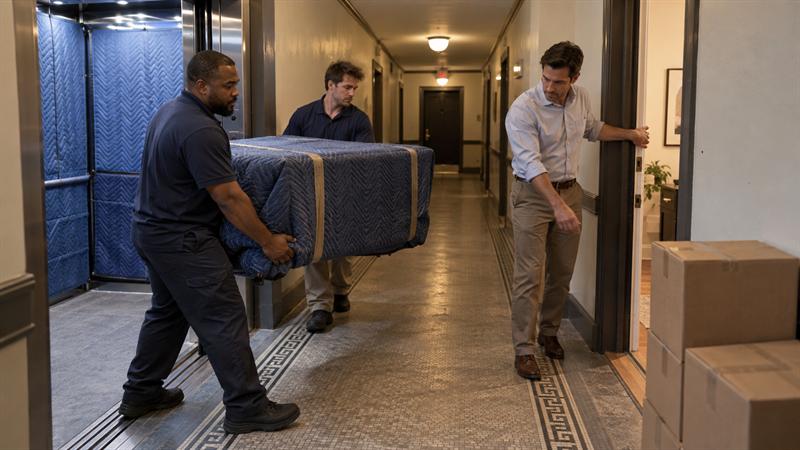
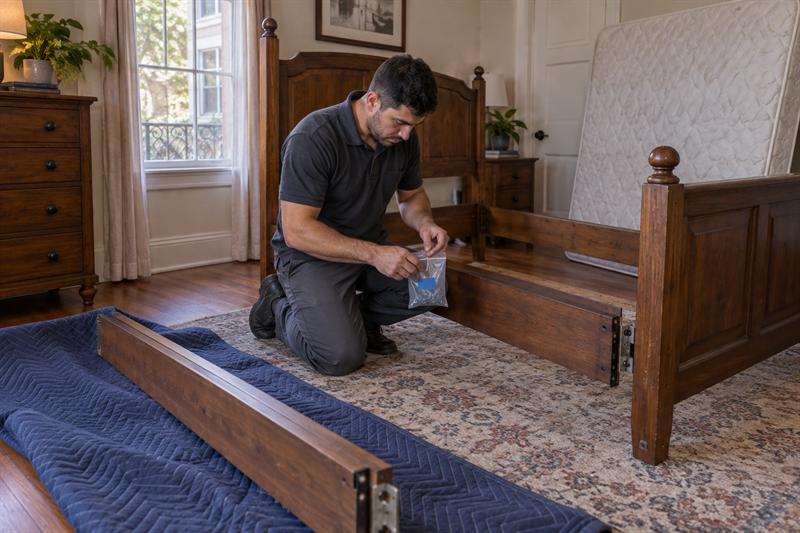
Disassemble furniture when it improves access, loading, or storage use. Bed frames, large tables, shelving units, and modular pieces are common examples, especially when moving through tight doorways, stairs, elevators, or narrow hallways.
Do not force apart a delicate or complex item simply because it is large. If instructions are unavailable or the construction is unclear, protect the piece and use careful handling rather than risk damage during disassembly.
Keep Hardware, Instructions, and Accessories With the Right Item
Put screws, bolts, brackets, remotes, and small accessories in labeled bags as soon as an item is disassembled. Attach the bag securely to the matching furniture piece when appropriate instead of placing all hardware in one mixed box.
Take a few photos before removing parts. This can help when a bed frame, table, or shelving unit comes out of storage months later and the original setup is no longer easy to remember.
Protect Wood, Glass, Upholstery, and Mattresses Differently
Different furniture materials need different preparation. Treating every piece the same can increase the chance of pressure, contact, and handling problems.
- Wood furniture: Clean surfaces and use appropriate padding to reduce contact during transport and storage.
- Glass and mirrors: Protect edges, add suitable cushioning, and label clearly for careful handling.
- Upholstered furniture: Clean and dry it fully before covering and storing it.
- Mattresses: Use a suitable cover and keep heavy boxes or furniture off the surface.
If you are dealing with oversized furniture, fragile glass, or difficult access points, professional moving support may be useful. For more detailed guidance, see how to move large furniture without damage.
How to Prepare Appliances and Electronics for Storage
Appliances and electronics need to be emptied, organized, and protected before storage. Packing them quickly at the end of a move can leave moisture, loose components, or missing cables unaddressed.
When an appliance still contains food, water, or loose contents, storage does not resolve the issue. It keeps those materials enclosed until the appliance is retrieved.
Prepare Appliances Before They Are Packed Away
Empty appliances first, then clean and dry the interior. Refrigerators and similar appliances may need defrosting before storage, and the correct process depends on the model and manufacturer instructions.
- Remove food, liquids, and loose interior pieces.
- Clean interior surfaces and allow them to dry fully.
- Defrost applicable appliances according to manufacturer guidance.
- Keep manuals and necessary accessories together in a labeled place.
Do not wait until the truck arrives to prepare appliances. Drying takes time, and rushed preparation can leave moisture and missing parts to deal with later.
Keep Cables and Accessories Organized With Electronics
Label cables before disconnecting them, then keep chargers, remotes, adapters, and mounting components with the device they belong to. A television, computer, or small appliance is harder to set up when its power cord or remote is packed in an unmarked carton elsewhere in the unit.
Use appropriate cushioning and avoid stacking heavy boxes directly on sensitive equipment. This keeps storage organized and makes setup simpler when the item returns to use.
Consider the Storage Environment for Sensitive Belongings
Electronics, photographs, paper records, artwork, antiques, and delicate materials deserve extra attention when you are choosing where to store them. The right environment depends on the item, how long it will be stored, and the conditions available at the facility.
For belongings affected by changing temperature or humidity, review the practical factors covered in climate-controlled storage benefits. Consider sensitive belongings before they are packed and loaded into a unit.
Pack Clothing, Documents, and Fragile Household Items for Easier Retrieval
Clothing, records, and fragile household items need clear labels and purposeful packing because they are easy to lose track of once storage begins. These categories can also include belongings that are difficult or impossible to replace.
Storage works better when boxes clearly identify what is inside and why it matters. A carton labeled only “miscellaneous” does not help when you need one specific document, winter coat, or framed photo.
Clothing, Linens, and Seasonal Items
Wash and dry clothing, linens, towels, and bedding before packing. Group them by season, household member, or room so the label answers the question you will have later: where is the item I need?
- Pack clean, dry textiles in appropriate containers or boxes.
- Label boxes by season or household member.
- Keep near-term seasonal needs near the unit entrance.
- Separate everyday clothing from items that will not be needed soon.
This organization helps prevent seasonal items from disappearing into long-term storage when they are needed sooner than expected.
Important Documents, Photos, and Sentimental Items
Important documents, photographs, and sentimental belongings should be considered separately from ordinary household goods. Many households prefer to keep critical records, valuables, and irreplaceable items accessible instead of placing them in general storage.
If these belongings will be stored, use clearly labeled, appropriately protective containers and record them in the inventory. An item that cannot be replaced should not be treated like an unmarked box of household supplies.
Dishes, Lamps, Mirrors, Artwork, and Fragile Décor
Wrap fragile items individually as appropriate, use cartons that fit their size and weight, and mark boxes clearly. Do not stack heavy objects on fragile cartons simply because there is open space.
Keep framed glass and mirrors upright when practical and properly protected. For step-by-step packing methods, refer to how to pack fragile items safely for moving.
Label Boxes and Create a Simple Storage Inventory
Detailed labels and a basic inventory make storage more usable later. Without them, finding one needed item can mean opening multiple boxes, moving stacked cartons, and guessing where things were placed.
A simple system is usually more useful than a complicated one. The best inventory is one you will update when boxes go into or come out of storage.
What Every Storage Box Label Should Include
Each label should identify the contents clearly enough that you can find the box without opening it. Room-only labels are not enough for storage because several boxes can come from the same room.
- Room or category
- Specific contents
- Box number
- Handling instruction, such as “fragile,” “upright,” or “do not stack”
- Priority note, such as “access first” or “long-term”
For example, “Kitchen 04: baking pans and mixing bowls, access first” gives you a useful answer later. “Kitchen” does not.
Build an Inventory That Matches the Box Numbers
Use a notebook, spreadsheet, or notes app to record each box number, detailed contents, and general location in the storage unit. Keep the inventory with you or stored digitally, not inside a box that could be difficult to reach.
Update the list when boxes are removed or added. If you have several unlabeled cartons, label them before they disappear into the unit. Confusion usually increases after furniture and stacked boxes block access.
Plan the Storage Unit Layout Before Loading
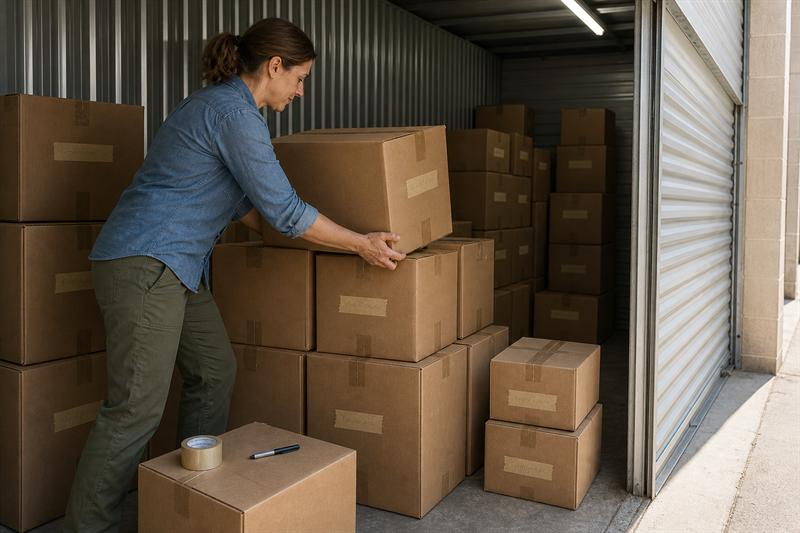
Plan the layout before unloading the truck. Arrange the storage unit for stability first and access second, based on how frequently you expect to return.
A rushed loading process can result in a unit where everything fits but little can be found. A unit packed wall to wall may use space efficiently, but it does not work well for a household that expects to retrieve boxes during the storage period.
Load Heavy and Sturdy Items First
Place heavy, stable belongings low in the unit and use them as a base where appropriate. Keep fragile cartons out from under heavy boxes and furniture.
This loading order can reduce pressure on lighter belongings and create a more stable arrangement. Loading heavy items last can lead to shifting stacks, crushed cartons, and a difficult reorganization job.
Keep Frequently Needed Items Near the Front
Place seasonal belongings, household records, move-in essentials, and access-first boxes near the front. Keep the inventory outside the unit so you can locate a box before moving anything.
If you expect to need an item during storage, it belongs in a reachable position. This determines whether a quick retrieval stays quick or turns into a larger unloading task.
Leave an Access Path When You Expect Return Visits
Leave an aisle when you expect to return to the unit for boxes or furniture. A tightly packed layout works best when there is little or no need for access before final delivery.
When the plan involves regular visits, an access path is the practical choice. It keeps the unit functional and helps prevent every retrieval from becoming a rearranging project.
What Not to Put in a Storage Unit
Do not use a storage unit as a catch-all for items that need special handling or regular access. Storage agreements vary, but certain categories are commonly restricted or unsuitable for ordinary storage.
Common Categories That May Be Restricted or Unsuitable for Storage
- Perishable food and items that may attract pests
- Flammable, hazardous, or combustible materials
- Living plants, pets, or other living things
- Medications, critical documents, valuables, and daily essentials
- Anything prohibited by the facility’s rental agreement
Hazardous materials need the appropriate disposal or handling process, not a box in storage. Critical documents, medications, and daily essentials should remain available because storage access is not a substitute for having necessary items on hand.
When Professional Packing and Moving Support Can Help
Professional support is most useful when storage involves items or access conditions that make a rushed DIY approach more difficult. Large furniture, fragile belongings, stairs, elevators, narrow hallways, and a storage period between homes all add moving steps that need to work together.
H and U Express Moving offers home moving, packing, storage, and large or fragile item handling services. These services can help households coordinate packing, protective supplies, loading order, storage, and later delivery when the move requires more than a simple drop-off.
Situations Where Extra Help May Be Useful
If your storage plan includes heavy, fragile, or hard-to-access belongings, additional planning or moving support may be helpful before moving day.
- A bed frame, sectional, glass table, or large furniture piece needs careful disassembly or protection.
- Artwork, mirrors, electronics, or fragile household items need more than basic box packing.
- Stairs, elevators, narrow hallways, or limited parking make loading more complicated.
- Your move-out date, storage period, and later delivery need to be coordinated.
These situations can lead to delays or disorganized loading when they are left until the crew arrives. H and U Express Moving provides home moves, packing services, short-term and long-term storage, and handling for large or fragile items for households that need support with the storage portion of a move.
Key Takeaways
- Sort belongings before packing so storage space is used for items worth keeping.
- Clean and fully dry items before they go into boxes, covers, or containers.
- Use packing materials that fit the item’s weight, size, surface, and fragility.
- Label boxes with specific contents, handling notes, and access priority.
- Keep a numbered inventory and place frequently needed boxes near the front.
- Load heavy, sturdy items low and leave an access path when return visits are expected.
- Keep restricted, hazardous, perishable, and daily-essential items out of general storage.
Conclusion: Prepare for Storage With the Move-Out Day in Mind
The real storage problem is not getting belongings into a unit. It is packing without a system, then dealing with damp items, missing hardware, unclear labels, fragile boxes beneath heavy furniture, and essentials that cannot be reached when needed.
H and U Express Moving is a practical option when your move includes storage, large furniture, fragile belongings, or a timeline that needs more than last-minute loading. Packing support, careful handling, and coordinated moving and storage services can help make the storage portion of the move more organized from the first box to later delivery.
Frequently Asked Questions About Preparing Items for Storage
Should I clean furniture before putting it in storage?
Yes. Clean furniture and let it dry fully before it is packed or stored. Dust, spills, food residue, and moisture can become more difficult to address after an item has been enclosed for a period of time.
For example, upholstered furniture should be cleaned and completely dry before it is covered, while wood furniture should have dust and residue removed before protective padding is applied. The cleaning method depends on the material and any manufacturer care instructions.
Should furniture be wrapped in plastic for storage?
Not every furniture item should be prepared the same way. The right protection depends on the material, expected storage period, and storage environment.
Furniture pads and moving blankets help separate finished surfaces during handling, while suitable covers can help keep mattresses and upholstered pieces separated from dust and contact with other belongings. Plastic alone is not a complete plan for protecting furniture in storage.
How do I prepare appliances for storage?
Empty appliances, remove food and liquids, clean interior surfaces, and allow them to dry completely before storage. Refrigerators and similar appliances may need defrosting, but the correct process depends on the model and manufacturer instructions.
Keep manuals, cords, shelves, trays, and other accessories clearly labeled with the appliance. The main issue is preventing moisture and loose parts from being sealed inside or separated during the storage period.
What should not be put in a storage unit?
Perishable food, flammable or hazardous materials, and living things are commonly restricted or unsuitable for storage. Medications, critical paperwork, valuables, and everyday essentials are also generally better kept accessible rather than packed into a general unit.
The key distinction is whether an item needs special handling, safe disposal, or regular access. Those needs do not disappear just because the item is placed in storage.
How should I label boxes for storage?
Label boxes with the room or category, specific contents, box number, handling instructions, and access priority. A label such as “Bedroom” is too broad when several boxes came from the same room.
A more useful label would read: “Bedroom 03: winter bedding and pillows, access first.” Matching that box number to a written or digital inventory tells you what is inside and where to find it without opening every carton.
Should I use professional movers to move items into storage?
Professional movers can be useful when storage includes heavy furniture, fragile belongings, difficult access, complex disassembly, or a move that requires storage before final delivery. The decision depends on the items and access conditions, not just the number of boxes.
A household may pack standard cartons independently but benefit from moving support for a sectional, bed frame, glass table, large appliance, or artwork. Those items can slow down a move when they are not planned for before loading begins.