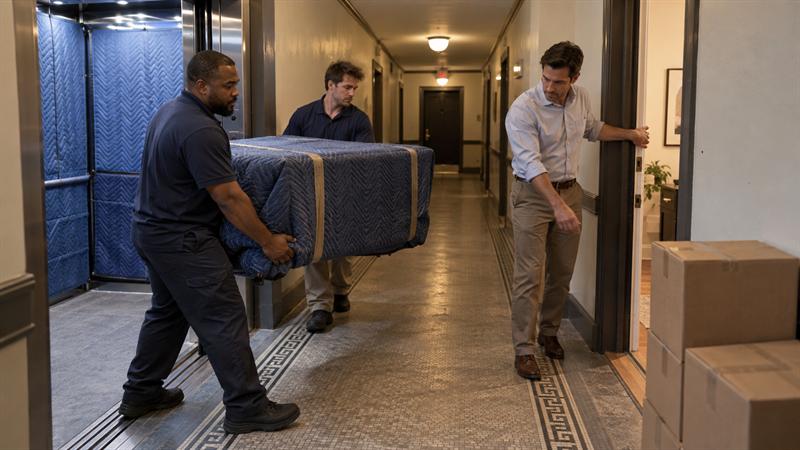
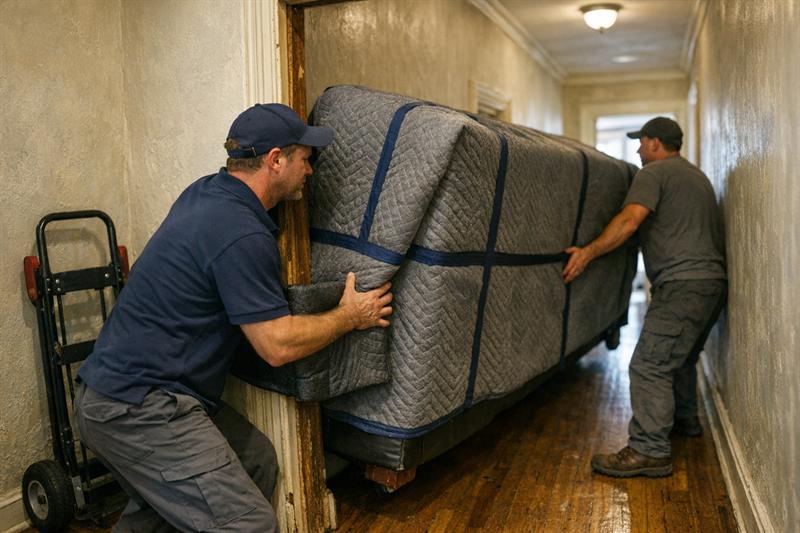
Moving large furniture is not only a heavy-lifting problem. A sectional that fits through the front door can still get stuck at a hallway turn, and a dresser that seems stable in a bedroom can become difficult to control on stairs.
At H and U Express Moving, route planning is an important part of preparing for a large furniture move. Measuring first, protecting vulnerable surfaces, and deciding whether the move needs more help gives the job a clear direction before the first lift.
Start With a Route and Fit Check Before Moving Large Furniture
Measure the route before moving large furniture. If the item does not have enough clearance from its current location to the truck and into the new room, lifting it first can lead to scraped walls, damaged trim, an awkward stop in the middle of the route, or a load that is difficult to control.
Measure the Furniture and Every Point Along the Route
Start with the furniture’s height, width, and depth. For couches, tall cabinets, and other bulky pieces, a diagonal measurement can matter when the item needs to be angled through a doorway or around a corner.
- Measure door openings, not just the door itself.
- Check hallway width, ceiling height, and tight turns.
- Measure stairwell clearance and landing space.
- Account for handrails, baseboards, door hardware, and exterior gates.
- Confirm the furniture will fit into its final room and placement area.
A common mistake is measuring the first doorway and stopping there. The tightest point may be a corner, stair landing, or hallway transition. If furniture barely clears one area, plan for slow, controlled handling at the tight points that follow.
Clear the Path and Check Access Conditions
Clear the entire route before moving day. Remove rugs, boxes, décor, cords, and anything else that could catch underfoot or force helpers to change direction while carrying a heavy item.
Check exterior access too. Wet walkways, uneven ground, narrow gates, long parking distances, apartment elevators, and loading restrictions can change how the furniture needs to be handled. A plan that focuses only on the inside of the home leaves important parts of the move unaddressed.
Decide Whether the Furniture Should Be Disassembled
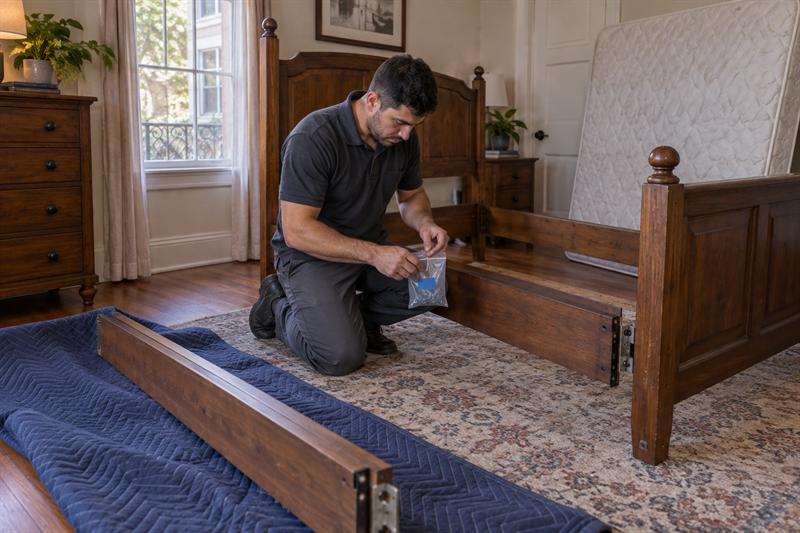
Disassemble furniture when doing so reduces bulk or protects vulnerable parts. Detachable sofa legs, sectional connectors, bed-frame pieces, table legs, mirrors, shelves, glass tops, and removable drawers can make a difficult item easier to manage.
Do not take furniture apart simply because it is large. Unnecessary disassembly can create missing hardware, damaged connections, and reassembly delays. Photograph the piece before removing components, place hardware in labeled bags, and avoid forcing parts that were not designed to come apart. For larger pieces that need careful breakdown and setup, understanding what happens on moving day can help set realistic expectations.
Prepare the Furniture and Home to Help Prevent Damage
Protecting large furniture means protecting the item and everything around it. Padding a dresser while leaving a narrow door frame exposed can still create a damage point. Preparation should match the materials involved and the route the item will take.
Empty, Secure, and Stabilize the Furniture
Empty drawers, cabinets, and shelves when possible. This reduces weight, prevents contents from shifting, and can make the furniture more stable during carrying and transport.
Secure drawers and doors so they do not swing open when the item is tilted. Remove loose cushions, lamps, shelves, and decorative pieces. Avoid lifting a dresser by drawer pulls, an armoire by its doors, or a table by a removable leaf. Those parts may not be reliable lifting points and can break or shift under load.
Match Protective Materials to the Furniture
Use moving blankets or furniture pads to cover upholstery, finished wood, and painted surfaces. Secure the padding so it stays in place while the item moves through doorways and around corners. A loose blanket provides limited protection once the furniture shifts in someone’s hands.
Glass, mirrors, and delicate tops need separate handling from the main furniture piece. Wrap and isolate them rather than placing them under pressure from heavier items. For delicate components and breakable household pieces, this guide on how to pack fragile items safely for moving provides a more detailed protection plan.
Protect Floors, Walls, Railings, and Door Frames
Protect the route before the furniture enters it. Use suitable floor protection, pad exposed corners and door frames, and keep one person focused on clearance when the item reaches a tight turn.
Do not drag heavy furniture across flooring. Dragging can scratch surfaces, catch on thresholds, and make the item harder to stop or adjust. Furniture sliders can help with short, level repositioning on an appropriate surface, but they do not solve stairs, uneven paths, door thresholds, or truck loading.
Choose the Right Equipment for the Furniture and the Route
The right equipment depends on the item and the route, not just the item’s weight. A tool that works well for shifting a dresser across a room does not automatically work for moving that dresser down stairs or into a truck.
When Furniture Sliders Can Help
Furniture sliders are best for short, controlled movement across a suitable, level floor. They reduce friction when repositioning a couch, dresser, or table within a room.
They are not a replacement for lifting support. Once furniture reaches a threshold, stairway, uneven surface, or ramp, sliders are no longer the right tool and the handling plan needs to change.
When a Dolly or Hand Truck Is Appropriate
A dolly or hand truck can help with tall, stable items that can be secured and moved over a clear route. An appliance dolly, standard hand truck, and flat furniture dolly are designed for different types of loads.
Top-heavy cabinets, fragile furniture, and items moving on stairs may need more than a basic dolly plan. If the load cannot stay stable from start to finish, the equipment is not solving the problem; it is adding another point where control can be lost.
Why Lifting Straps and Team Lifting Require Coordination
Lifting straps and extra helpers work best when everyone has a defined role. Decide who leads the movement, who watches clearances, who opens doors, and where the furniture will be set down if the group needs to stop.
Strength does not fix an awkward angle, a narrow turn, or an unstable load. Trying to correct a piece while it is already suspended can lead to scraped walls and lost footing. Stop, reset the angle, and continue only when the item is controlled.
How to Move Common Large Furniture Items
Different furniture types create different moving problems. The right approach changes based on the item’s construction, weight distribution, finish, and removable parts.
Sofas, Sectionals, and Recliners
Separate sectional pieces when the connectors are designed to release. Remove detachable legs when doing so improves doorway clearance, and protect upholstery from snags, moisture, and rough surfaces.
Sofas can look flexible enough to force around a corner, but pressure against walls and door frames does not create clearance. If the route is too tight, stop and reassess the angle, dimensions, or disassembly options.
Dressers, Armoires, and Solid-Wood Cabinets
Empty drawers and remove detachable shelves or mirror attachments before moving dressers, armoires, and solid-wood cabinets. These pieces can have uneven weight distribution, especially when the upper section is taller or heavier than expected.
Lift from stable structural areas rather than drawer fronts, decorative trim, or cabinet doors. If the piece tilts or shifts as it is lifted, the load may not be controlled well enough for the route ahead.
Dining Tables, Bed Frames, and Glass Tops
Remove table legs and disassemble bed frames when doing so reduces the furniture’s size and protects connection points. Label hardware as it is removed so reassembly does not become a separate problem after the move.
Glass tops should be wrapped and moved separately from the table base. Do not stack heavy furniture on glass, stone, or delicate finished surfaces. A solid wood tabletop generally handles pressure differently than a glass or stone component.
Large Appliances and Exceptionally Heavy Items Need a Different Plan
Large appliances, safes, pianos, and exceptionally heavy items should not be treated like ordinary furniture. Their weight, shape, internal components, and center of gravity may require a more specialized handling plan.
Follow manufacturer guidance for appliances where applicable. If the route includes stairs, limited clearance, or uncertain weight distribution, professional moving support may be appropriate. For a closer look at items that need more than a standard moving approach, review what requires specialty moving services and why it matters.
Safe Handling Practices That Help Prevent Damage and Injury
Safe furniture handling depends on keeping the load controlled from the first lift through truck loading. Rushing, changing plans mid-carry, or forcing an item through a tight space can damage property and create an unsafe situation for the people moving it.
Assign Roles and Communicate Before Lifting
Assign roles before the furniture leaves the floor. One person should guide the movement, another should monitor walls and clearances, and someone should manage doors or obstacles along the route.
Agree on simple commands and planned set-down points. If the furniture reaches a poor angle, set it down safely rather than attempting to rotate or reposition it while people are still carrying the weight.
Lift From Stable Points and Keep the Load Controlled
Lift from the furniture’s sturdy frame areas. Avoid handles, doors, drawers, trim, and removable pieces because they can fail under stress or shift the load unexpectedly.
Move slowly through corners, thresholds, stairs, and uneven surfaces. If the furniture becomes difficult to grip or starts tilting, the issue is no longer speed. Reset the item and reconsider the route or handling plan before continuing.
Secure Large Furniture in the Moving Truck
Furniture protection continues after the item leaves the house. Load heavy pieces in stable positions, place padding between furniture surfaces, and secure items so they do not shift during transport.
Loading order matters. Keep fragile pieces from bearing the weight of heavy furniture, and plan the truck so large items can be unloaded without forcing other pieces out of the way.
Common Mistakes When Moving Bulky Furniture
Furniture damage is often linked to a small number of repeat mistakes. Avoiding them creates a clearer moving path and helps prevent a manageable job from becoming a repair problem.
- Skipping measurements: An item that fits through one doorway can still get stuck at a turn or stair landing. Measure the full route.
- Dragging furniture: This can scratch floors, catch on thresholds, and make the item harder to control.
- Leaving loose parts in place: Drawers, shelves, glass tops, and detachable legs can shift the load and create break points.
- Using unsecured blankets: Padding that slides out of place leaves finishes exposed when the furniture reaches a tight area.
- Forcing furniture through a tight opening: This can result in wall damage, torn upholstery, damaged trim, or broken components.
- Attempting stairs with too little help: Stairs reduce footing and clearance at the same time. If the furniture cannot be controlled at every step, the move needs a different plan.
When to Call Professional Large Furniture Movers
If the route includes stairs, sharp turns, fragile materials, limited parking, or an item that cannot be controlled confidently, additional planning or support may be needed before move day. These conditions can turn a simple furniture move into a more demanding handling job:
- The item is oversized, top-heavy, fragile, valuable, or difficult to grip.
- The route includes stairs, elevators, narrow halls, balconies, uneven walkways, or tight exterior access.
- There are not enough helpers or the necessary equipment is unavailable.
- The move schedule requires furniture to be stored before the destination is ready.
These conditions can lead to last-minute delays and rushed decisions. The practical next step is to use a moving plan that matches the item and route instead of trying to force a difficult move through limited access.
Signs the Move Is More Complex Than It Looks
One large item can require much of the same planning as a full home move. A heavy armoire, sectional, glass table, or oversized dresser still needs a clear route, protective materials, enough handling support, and a stable loading plan.
Timing can add another layer of difficulty when the destination is not ready or move dates change. Furniture left in an unsuitable location may need to be handled again later. When timing is the issue, moving and storage services working together can provide a more organized path between locations.
Support for Large, Fragile, and Hard-to-Manage Furniture
H and U Express Moving provides home moves, professional packing, storage, and handling for large or fragile household items. These services can be useful when furniture needs protection before transport, when access conditions make the route difficult, or when storage is needed between move-out and move-in.
Published hourly moving packages and included protective supplies can give customers a clearer starting point when evaluating help for a difficult item. The goal is not to overcomplicate a furniture move. It is to address route, protection, and handling issues before they become damage, delays, or a difficult recovery on moving day.
Key Takeaways for Moving Large Furniture
- Measure the furniture and the full route before anyone starts lifting.
- Clear the path and protect floors, walls, door frames, and furniture surfaces.
- Remove or secure drawers, legs, glass tops, shelves, and other components that can shift or break.
- Choose equipment based on the item and the route, not weight alone.
- Use professional moving support when stairs, tight access, fragile finishes, limited help, or storage needs make the move harder to control.
Plan the Move Before the First Lift
The real problem with moving large furniture is not simply that it is heavy. Damage can start when the route is not measured, the item is not protected, loose components are left in place, or people try to force a piece through a space it cannot clear.
H and U Express Moving can be a practical next step when furniture is large, fragile, difficult to manage, or moving through stairs and tight access. With protective supplies included in published hourly packages and services for home moves, packing, storage, and large or fragile items, the move can be planned around the conditions that matter most.
Frequently Asked Questions
How do you move heavy furniture without scratching the floor?
Clear the route first, then use a method that matches the flooring and the furniture’s base. Furniture sliders can help with a short, level move on an appropriate surface, but they do not replace controlled lifting at thresholds, stairs, uneven areas, or truck ramps.
Dragging can damage floors by scratching surfaces, catching on transitions, and making the item harder to stop or reposition once it begins moving.
Should you empty drawers before moving a dresser?
Yes, emptying drawers generally reduces the dresser’s weight and keeps contents from shifting during the move. It also makes it easier to secure drawers so they do not open when the piece is tilted or carried.
The key distinction is where the dresser is lifted. Drawer fronts and pulls are not usually structural lifting points. The furniture should be handled from stable frame areas so the drawers and hardware are not carrying the load.
How can you tell if a couch will fit through a doorway?
Measure the couch and the complete route, including the doorway, hallway, turns, ceiling height, and stair landing. A couch can clear the doorway but still fail at the next corner because turn clearance differs from straight-line clearance.
Detachable legs can reduce dimensions in some cases. If the couch still requires force to get around a corner, reassess the route or handling angle. Forcing it through can damage the upholstery, wall, or door frame.
What is a safer way to move furniture down stairs?
A stair move is easier to manage when the furniture stays controlled at every step. That requires a clear stairwell, enough help, planned communication, and known set-down points before the item is lifted.
Stairs change footing and reduce clearance at the same time. If the item is top-heavy, fragile, too large for the stairwell, or difficult to grip, the question is not only whether it technically fits. It is whether it can be controlled through the full descent.
Do movers move one piece of large furniture?
Many moving companies can assist with one large item, depending on the furniture, access conditions, scheduling, and service area. A one-piece move still needs route planning, protection, loading, and secure transport.
The size of the job does not determine its difficulty. A single oversized dresser, sectional, armoire, or glass table can create the same access and handling issues as part of a larger household move.
When should you hire professional movers for large furniture?
Professional movers can be a practical choice when furniture is unusually heavy, oversized, top-heavy, fragile, valuable, or difficult to grip. The decision becomes clearer when the route includes stairs, narrow halls, sharp turns, apartment access, uneven outdoor areas, or limited parking.
Limited help and unsuitable equipment also change the decision. If the item cannot be measured, protected, and controlled confidently from start to finish, the move may need a more structured handling plan.